
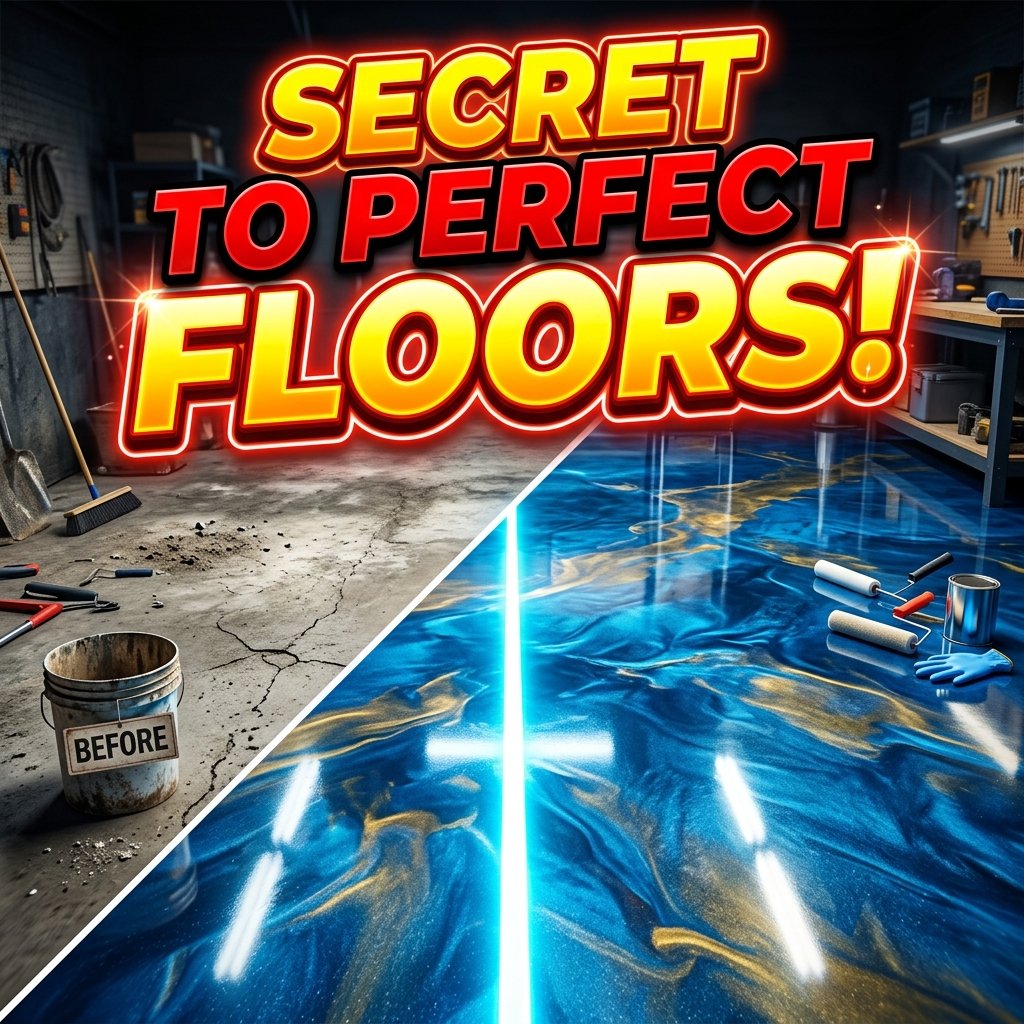
Decorative Epoxy Flooring: The Ultimate Guide for Homes
When considering decorative epoxy flooring for residential interiors, homeowners must properly understand the exact application process. This highly durable liquid resin coating is poured directly over prepared concrete slabs to create a completely smooth, continuous surface. It aggressively resists chemical stains, heavy impacts, and extreme moisture, making it an excellent long-term option for garages, basements, and modern living rooms. By correctly utilizing advanced metallic pigments or multi-colored quartz flakes, professional contractors can quickly transform an otherwise ugly gray floor into a highly customized, ultra-glossy masterpiece that wipes clean instantly.
Many property owners spend a massive amount of money on standard tile or natural hardwood, only to watch those expensive materials suffer deep scratches or permanent water damage within a few short years. Plain concrete slabs in basements and utility rooms often look unfinished, while traditional wood planks struggle terribly against unexpected flooding and heavy daily foot traffic. Today, there is a massive consumer demand for a functional interior surface that actively handles physical abuse without forcing you to sacrifice physical beauty.
This strong shift in consumer demand explains exactly why decorative epoxy flooring has aggressively moved out of massive industrial warehouses and directly into high-end residential kitchens, private home gyms, and luxury open-plan living areas. A properly applied multi-layer resin system physically bonds tightly to a fully prepared concrete substrate, forming an impenetrable barrier. This specialized coating completely ignores physical abrasion, accidental liquid spills, and the severe temperature stress that routinely destroys basic ceramic tile.
1. Expert Authority: Why Proper Concrete Preparation Matters
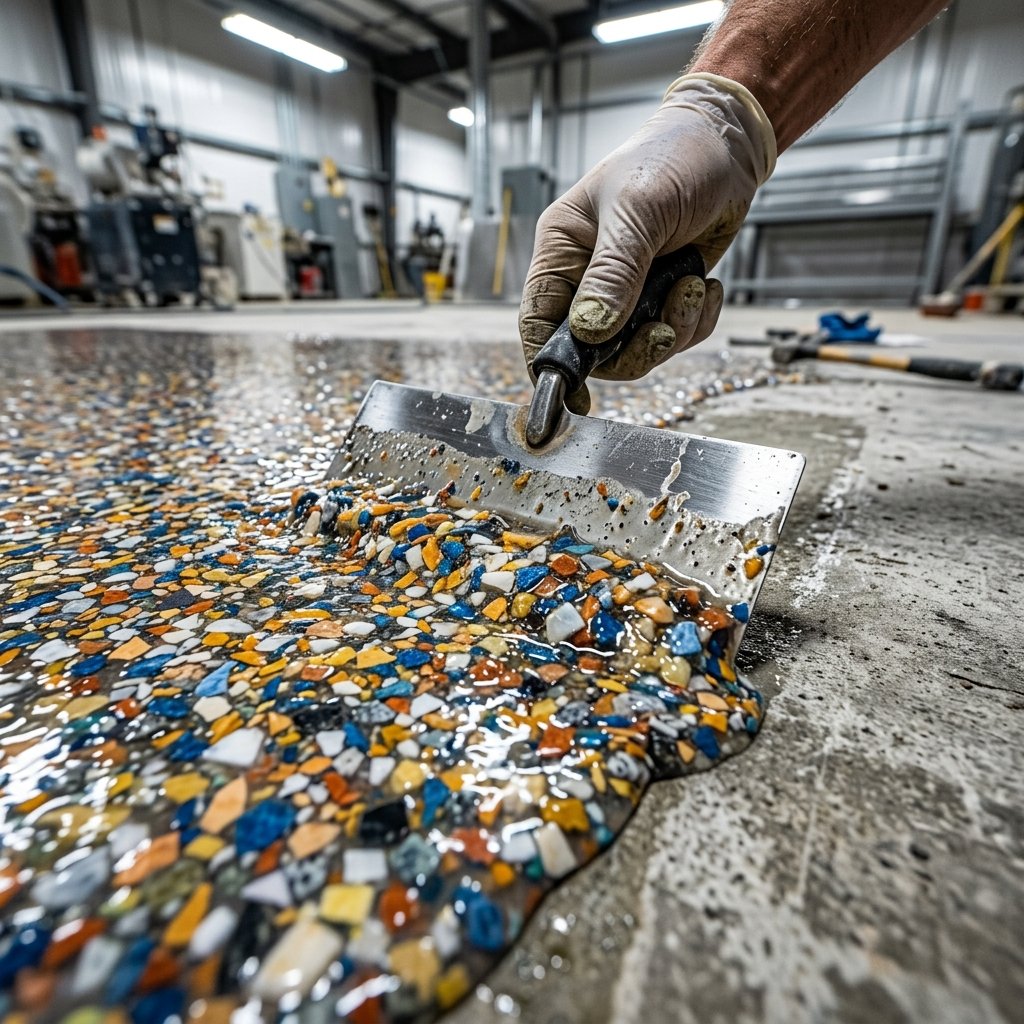
In my long career consulting on high-end residential construction projects, I have repeatedly seen eager homeowners make incredibly expensive mistakes by rushing the initial surface preparation phase. A beautiful final aesthetic completely relies on the raw structural integrity of the concrete floor hiding underneath it. If the base layer is weak or highly contaminated, the most expensive liquid resin in the world will still fail violently.
Before a contractor pours a single drop of chemical resin, the underlying slab must be aggressively profiled. This means the workers must use heavy mechanical diamond grinders or large shot-blasting machines to physically rip away the smooth top layer of the concrete. This rough, freshly exposed texture allows the thick chemical primer to properly bite into the floor, creating an unbreakable mechanical bond.
Furthermore, testing for hidden moisture is absolutely mandatory. Invisible water vapor rising upward through a basement slab is the leading cause of massive coating failures, such as ugly bubbling and full structural peeling. Highly skilled installers will always perform a calcium chloride test before committing to any job.
“Homeowners often obsess over the final color choices, but the real magic happens during the grinding phase. If your contractor does not spend hours heavily grinding the floor, your new coating will absolutely peel off within a year.”
Lead Industrial Floor Technician
2. Room-by-Room Finish Styles
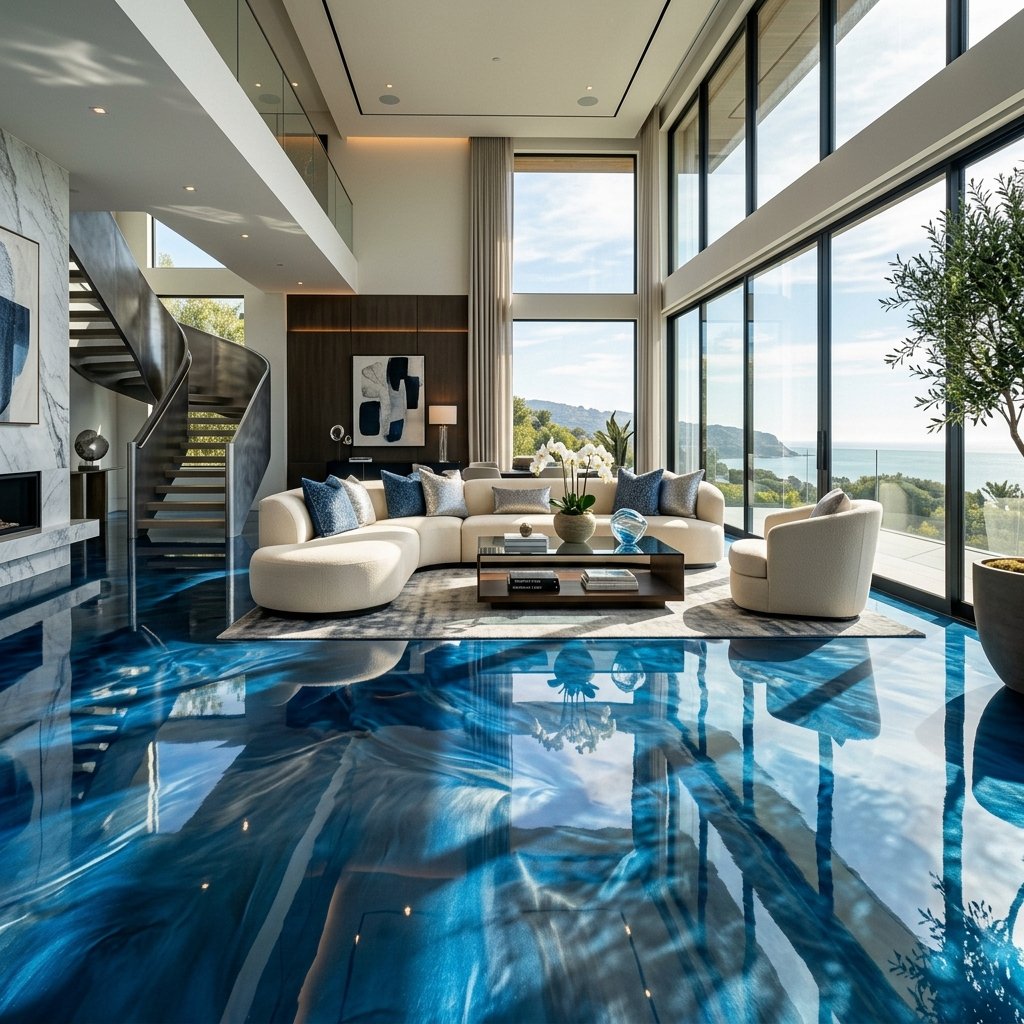
The massive visual appeal of modern resin coatings starts with how freely they can be physically shaped by the installer. A single chemical base can be heavily tinted, layered, and physically textured into dozens of completely unique visual effects. Professional designers treat this liquid material as a highly flexible blank canvas.
Different spaces clearly require very different visual and functional treatments. A quiet basement art studio and a highly active family kitchen face completely different daily demands. Here are the most effective pairings currently used in high-end homes:
Living Rooms and Main Foyers: Glossy, marbled metallic finishes completely dominate these areas. By suspending highly reflective metallic pigments inside the clear resin, the installer creates a rippling, three-dimensional liquid illusion that bounces natural sunlight beautifully across the entire room.
Kitchens and Large Dining Areas: Smooth, solid color options or very subtle faux-stone effects perform incredibly well here. Because there are absolutely no dirty grout lines to trap spilled food or grease, the entire surface wipes totally clean in just a few seconds.
Basements and Private Gyms: Heavy vinyl flake coatings or hard quartz sand blends completely mask physical scuffs while providing extreme resistance against dropped weights. The scattered chips also provide an excellent non-slip texture under sweaty shoes.
Garages and Indoor Workshops: Extremely thick, 100 percent solids industrial coatings rated specifically for massive vehicle weight and harsh chemical exposure remain the absolute standard.
3. Building the Custom Resin Look
Once the concrete is structurally sound and completely dry, the visual design comes down directly to the specific resin system chosen by the property owner. Each distinct chemical class behaves very differently under physical stress.
Thick 100 percent solids epoxy provides the absolute highest durability and forms the core foundation of most professional installations. Water-based options are significantly thinner and serve mostly as light dust sealers rather than heavy protective barriers. Finally, polyaspartic topcoats offer rapid curing times and extremely high resistance to direct ultraviolet sunlight.
In active practice, installation crews frequently combine these exact materials. They will pour a heavily tinted epoxy base layer for deep structural strength, scatter colorful decorative flakes across the wet surface, and then quickly lock everything down tightly under a crystal-clear polyaspartic topcoat.
This strategic layering approach provides the absolute best balance of physical beauty and extreme wear resistance. Highly personal aesthetic touches happen purely during this brief liquid window, allowing the contractor to physically swirl or trowel the colors into highly unique, unrepeatable patterns. For more inspiration on improving specific rooms, you can easily explore our related guide on unique home decor styles or read up on modern apartment visual enhancements.
4. The Daily Maintenance Protocol
A fully cured layer of decorative flooring asks very little from the homeowner, yet a few incredibly simple habits will keep the surface looking totally fresh for well over a decade.
Routine physical care remains extremely light. A soft microfiber dust mop quickly lifts sharp sand and abrasive grit that would otherwise slowly scratch the clear topcoat over time. For weekly deep cleaning, a simple damp mop mixed with a mild, pH-neutral soap handles sticky spills and muddy footprints perfectly.
“Never use aggressive acidic cleaners or heavy bleach on a resin surface. The harsh chemicals will slowly eat away the glossy finish and leave the floor looking permanently cloudy and completely dull.”
Residential Maintenance Expert
Direct sunlight is the one major environmental factor that many property owners simply forget. Standard clear resins can slowly turn a highly unattractive amber color under constant, direct ultraviolet exposure. If your living room features massive, unshaded windows, you must explicitly demand a highly UV-stable polyaspartic topcoat from your installation contractor.
By following these very simple guidelines, a properly poured floor will hold its original brilliant shine and intense physical strength far longer than most owners ever expect. The complete lack of maintenance effort makes it an incredibly practical, high-value upgrade for any intensely busy modern household.
Frequently Asked Questions
How long does an epoxy floor typically last in a home?
When properly installed over a heavily grinded concrete slab, a high-quality residential floor can easily last between ten and twenty years. The actual lifespan depends entirely on the thickness of the clear topcoat and the daily volume of heavy foot traffic.
Is the surface dangerously slippery when wet?
A standard high-gloss finish can become surprisingly slippery when covered in standing water. To completely prevent highly dangerous falls in bathrooms or near swimming pools, the contractor will aggressively mix an invisible anti-slip aluminum oxide aggregate directly into the final topcoat.
Can you pour this coating directly over old wooden floors?
No, pouring heavy liquid resin directly over old wooden subfloors is a terrible idea. Wood naturally expands and contracts heavily with seasonal temperature changes, which will rapidly cause the rigid top layer to crack and shatter into pieces.
How thick is a standard professional installation?
A premium multi-layer residential system is usually applied at a total thickness of two to three millimeters. While this sounds very thin, the dense chemical structure makes it significantly harder and far more resilient than extremely thick concrete.
READ MORE
Buying a Sectional Sofa in Singapore? Read This First! (2026 Guide)
Flexible Space Planning & Real World Storage Security (Expert Guide)
7 Boutique Hotel Home Styling Ideas to Elevate Your Space
X Van Lines Review: Does Their Full-Service Moving Protect Your Decor?
7 Secrets to Transform Backyards Into Luxury Retreats (Like a Pro!)





4 Comments