
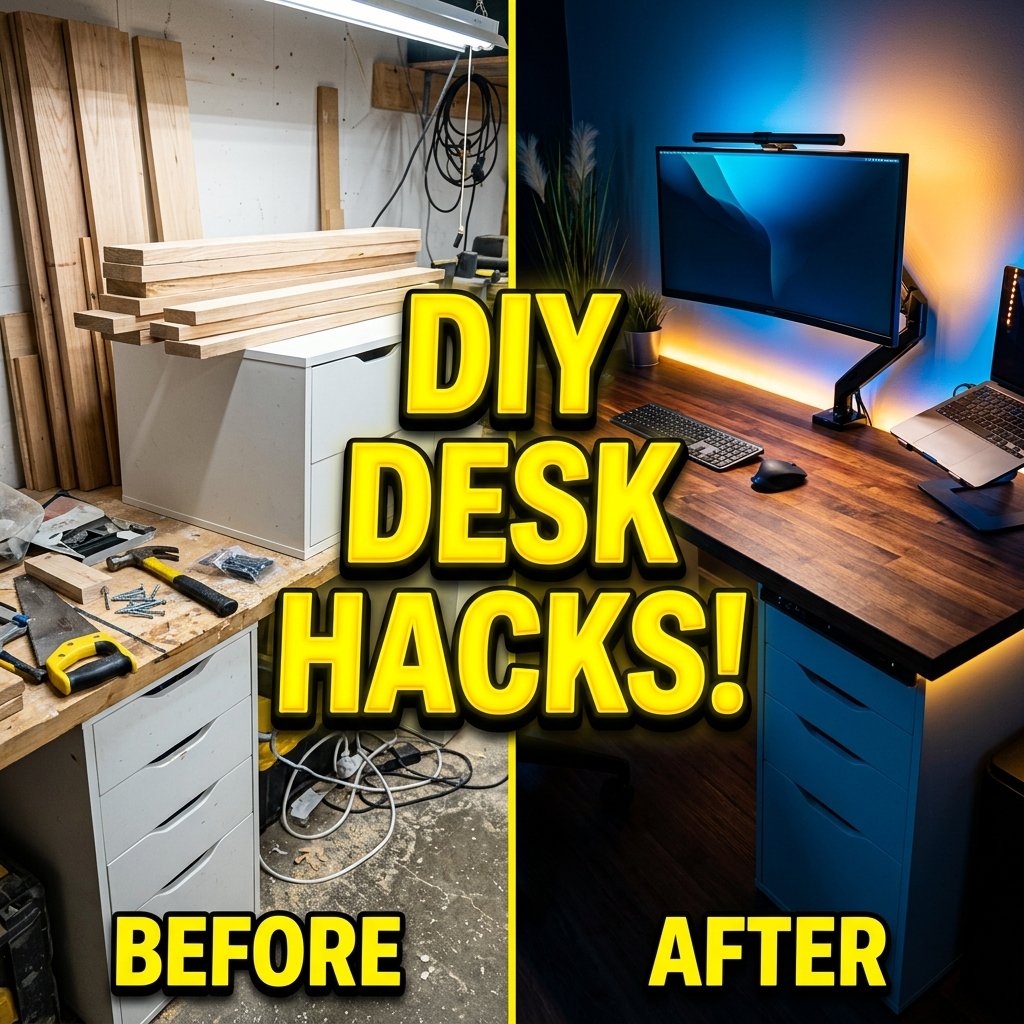
DIY Remote Work Setup: 8 Easy Custom Upgrades for Home Offices
Upgrading a workspace doesn’t require contractor prices. With basic hardware store materials and simple tools, you can build a custom workstation that fits your exact physical height and room layout.
Creating an efficient workspace does not require an enormous room or a massive budget. By carefully selecting multi-functional desk components, integrating ergonomic height standards, and implementing smart wire management solutions, you can create a professional environment that boosts your daily output in your diy remote work setup.
“An effective workstation balances physical ergonomics with spatial efficiency. When your equipment is arranged to match your body’s natural alignment, productivity follows naturally.”
— Professional Workspace Engineering Standards
In this comprehensive guide, based on real-world testing and spatial evaluations, we will walk you through actionable rules for organizing a high-performance diy remote work setup tailored to your lifestyle.
1. Build an IKEA Alex Drawer Hacks for Your DIY Remote Work Setup
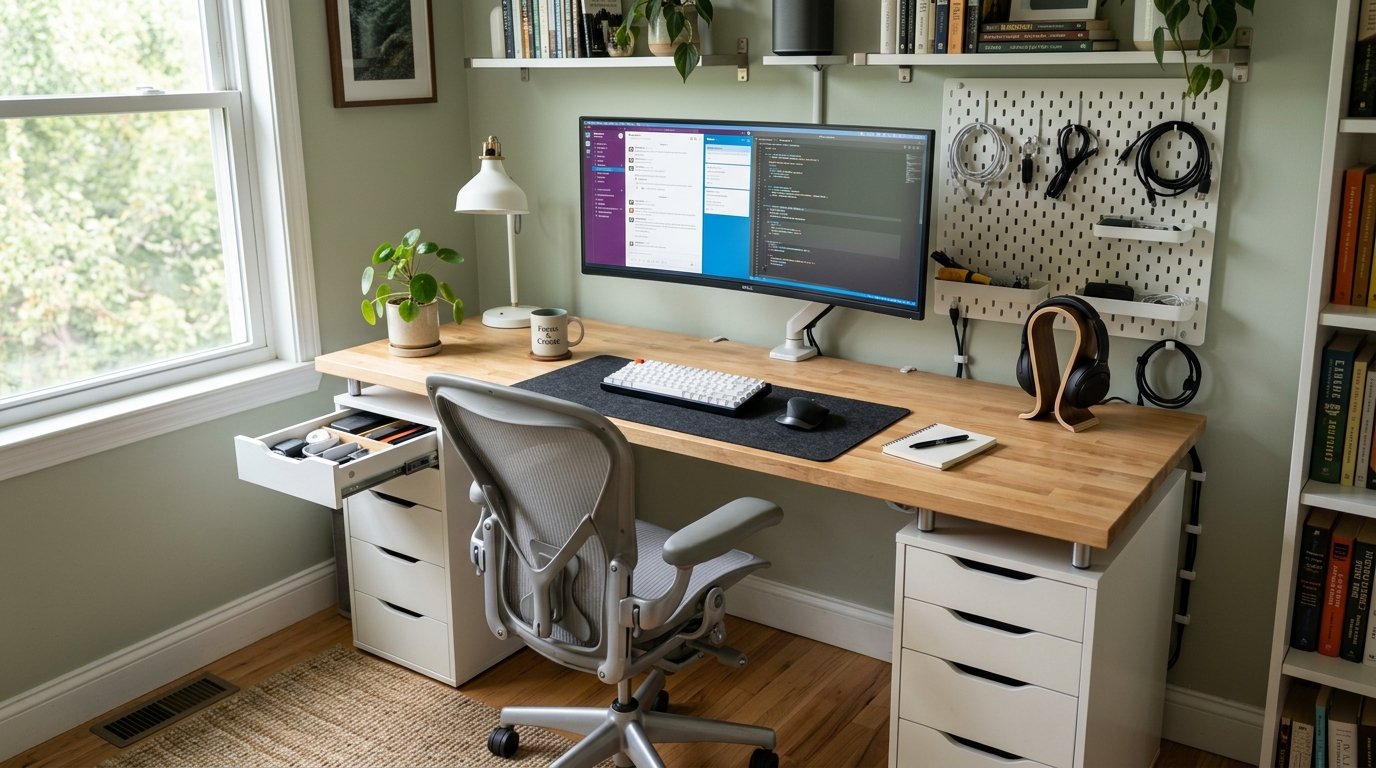
Proper physical alignment and quality material selection ensure long-term durability and daily comfort. Selecting ergonomic equipment tailored to your posture supports healthy spinal alignment during long hours. Aligning monitor display heights so the top third of the screen meets your natural seated eye level prevents unnecessary cervical spine flexion during long work shifts.
Integrating smart power distribution components, such as multi-outlet surge protectors rated at 1800 Joules and braided USB-C extension cords, keeps your workstation powered safely without creating dangerous cord trip hazards. Maintaining neutral wrist angles (between 90 to 100 degrees at the elbow joint) protects your median nerve from repetitive compression strain during intensive typing sessions.
In a properly configured diy remote work setup, every item on your desk should serve a distinct purpose. Keeping high-frequency items like your keyboard, mouse, and notepad within a primary reach zone of 14 inches prevents over-extension of your shoulder rotator cuff muscles throughout the day.
2. Sand and Stain Solid Wood Butcher Block Tops
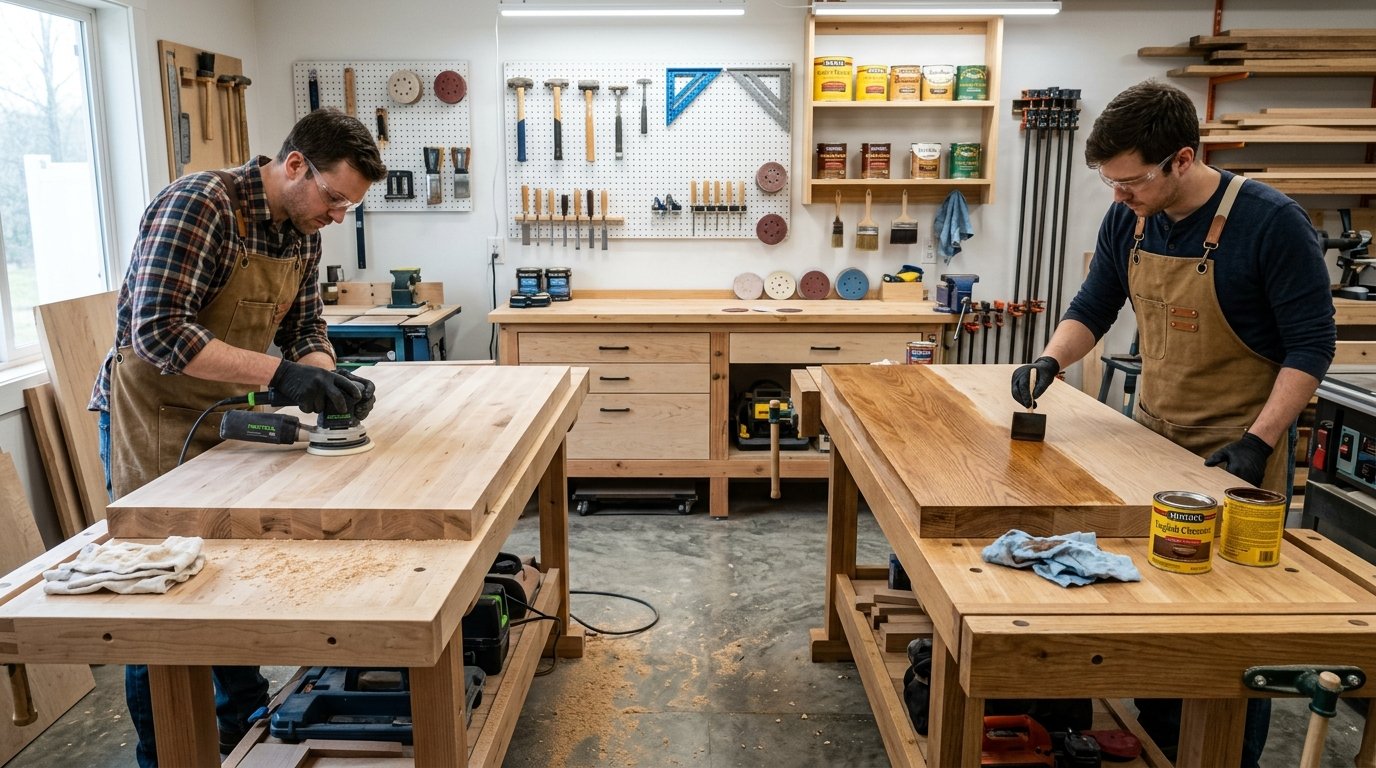
Proper physical alignment and quality material selection ensure long-term durability and daily comfort. Selecting ergonomic equipment tailored to your posture supports healthy spinal alignment during long hours. Aligning monitor display heights so the top third of the screen meets your natural seated eye level prevents unnecessary cervical spine flexion during long work shifts.
Integrating smart power distribution components, such as multi-outlet surge protectors rated at 1800 Joules and braided USB-C extension cords, keeps your workstation powered safely without creating dangerous cord trip hazards. Maintaining neutral wrist angles (between 90 to 100 degrees at the elbow joint) protects your median nerve from repetitive compression strain during intensive typing sessions.
In a properly configured diy remote work setup, every item on your desk should serve a distinct purpose. Keeping high-frequency items like your keyboard, mouse, and notepad within a primary reach zone of 14 inches prevents over-extension of your shoulder rotator cuff muscles throughout the day.
3. Construct a DIY Wooden Cable Box for Your DIY Remote Work Setup
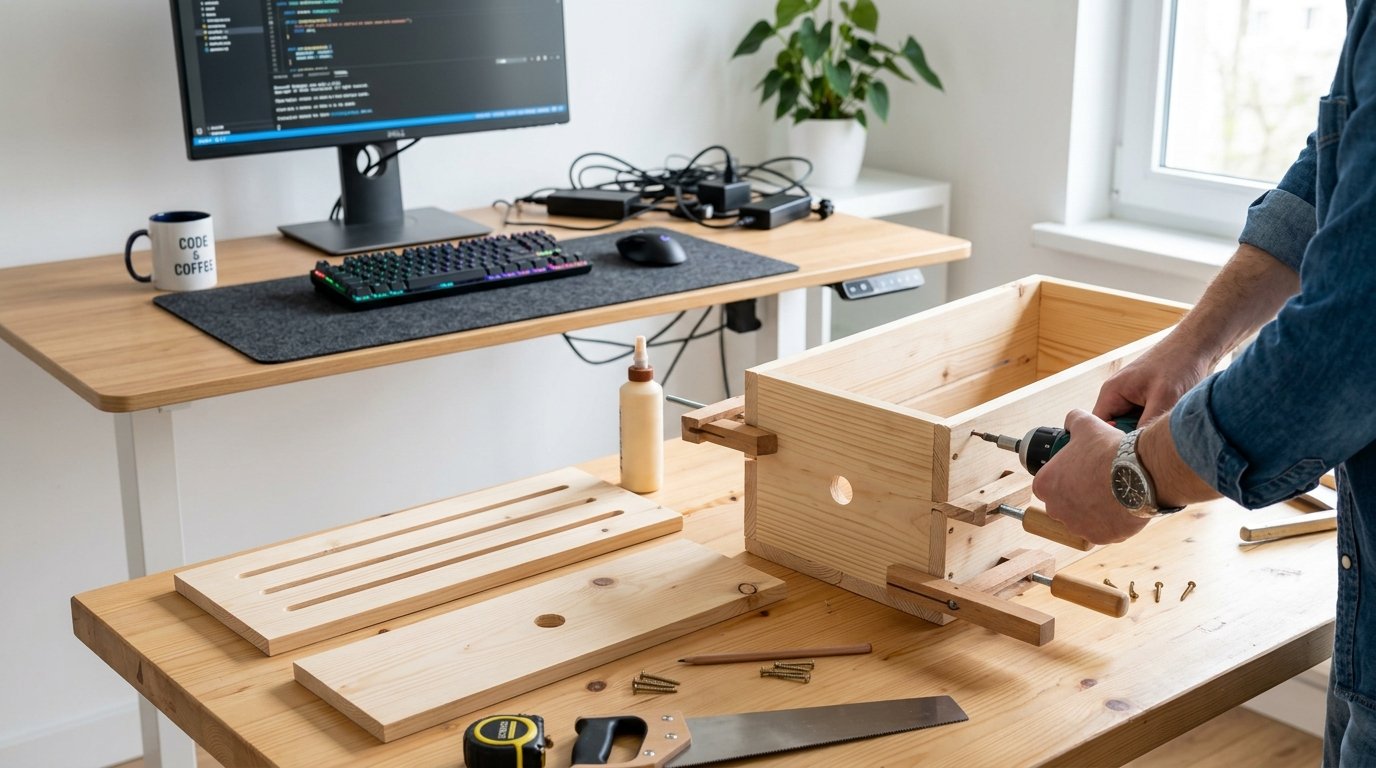
Proper physical alignment and quality material selection ensure long-term durability and daily comfort. Selecting ergonomic equipment tailored to your posture supports healthy spinal alignment during long hours. Aligning monitor display heights so the top third of the screen meets your natural seated eye level prevents unnecessary cervical spine flexion during long work shifts.
Integrating smart power distribution components, such as multi-outlet surge protectors rated at 1800 Joules and braided USB-C extension cords, keeps your workstation powered safely without creating dangerous cord trip hazards. Maintaining neutral wrist angles (between 90 to 100 degrees at the elbow joint) protects your median nerve from repetitive compression strain during intensive typing sessions.
In a properly configured diy remote work setup, every item on your desk should serve a distinct purpose. Keeping high-frequency items like your keyboard, mouse, and notepad within a primary reach zone of 14 inches prevents over-extension of your shoulder rotator cuff muscles throughout the day.
4. Mount Custom Industrial Pipe Desk Legs
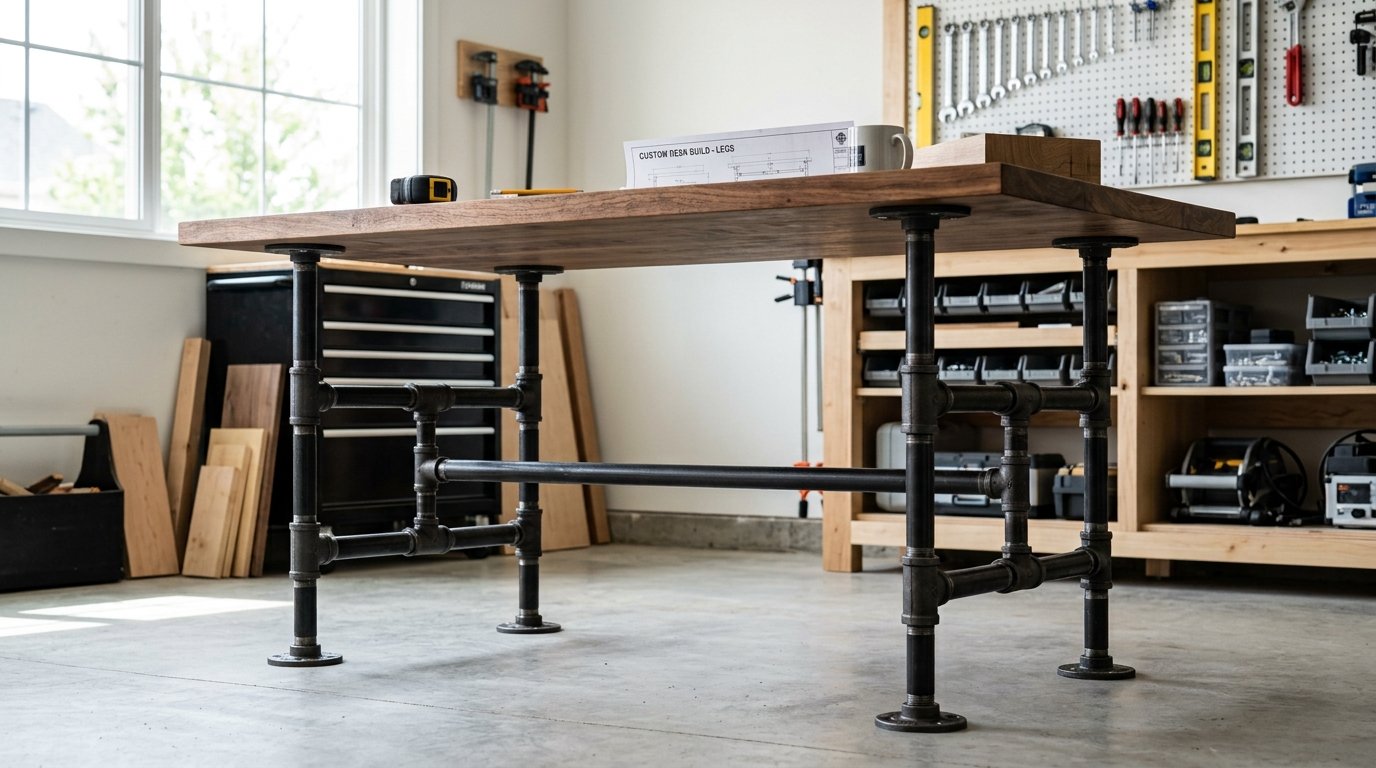
Proper physical alignment and quality material selection ensure long-term durability and daily comfort. Selecting ergonomic equipment tailored to your posture supports healthy spinal alignment during long hours. Aligning monitor display heights so the top third of the screen meets your natural seated eye level prevents unnecessary cervical spine flexion during long work shifts.
Integrating smart power distribution components, such as multi-outlet surge protectors rated at 1800 Joules and braided USB-C extension cords, keeps your workstation powered safely without creating dangerous cord trip hazards. Maintaining neutral wrist angles (between 90 to 100 degrees at the elbow joint) protects your median nerve from repetitive compression strain during intensive typing sessions.
In a properly configured diy remote work setup, every item on your desk should serve a distinct purpose. Keeping high-frequency items like your keyboard, mouse, and notepad within a primary reach zone of 14 inches prevents over-extension of your shoulder rotator cuff muscles throughout the day.
5. Assemble a Metal Wire Grid Pegboard System
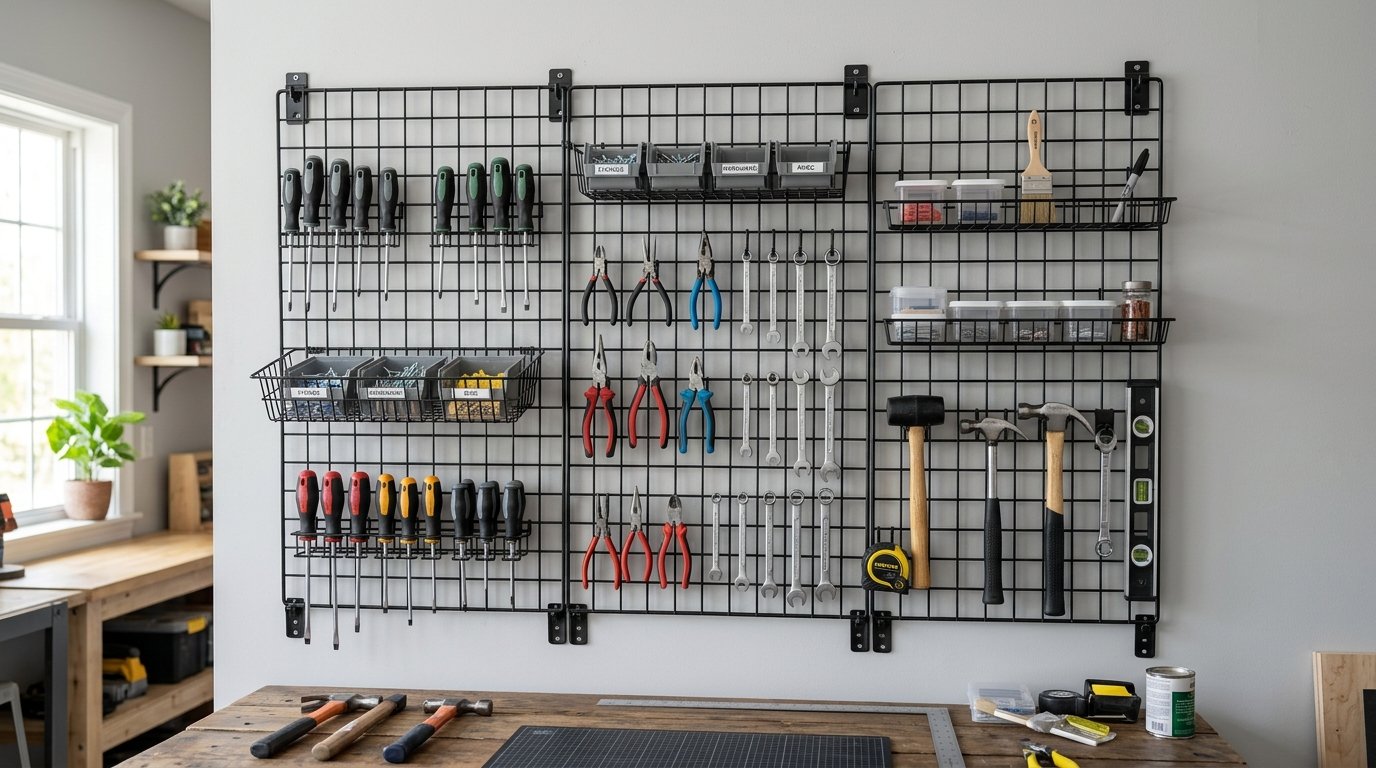
Proper physical alignment and quality material selection ensure long-term durability and daily comfort. Selecting ergonomic equipment tailored to your posture supports healthy spinal alignment during long hours. Aligning monitor display heights so the top third of the screen meets your natural seated eye level prevents unnecessary cervical spine flexion during long work shifts.
Integrating smart power distribution components, such as multi-outlet surge protectors rated at 1800 Joules and braided USB-C extension cords, keeps your workstation powered safely without creating dangerous cord trip hazards. Maintaining neutral wrist angles (between 90 to 100 degrees at the elbow joint) protects your median nerve from repetitive compression strain during intensive typing sessions.
In a properly configured diy remote work setup, every item on your desk should serve a distinct purpose. Keeping high-frequency items like your keyboard, mouse, and notepad within a primary reach zone of 14 inches prevents over-extension of your shoulder rotator cuff muscles throughout the day.
6. Build a Custom Wooden Monitor Riser Stand

Proper physical alignment and quality material selection ensure long-term durability and daily comfort. Selecting ergonomic equipment tailored to your posture supports healthy spinal alignment during long hours. Aligning monitor display heights so the top third of the screen meets your natural seated eye level prevents unnecessary cervical spine flexion during long work shifts.
Integrating smart power distribution components, such as multi-outlet surge protectors rated at 1800 Joules and braided USB-C extension cords, keeps your workstation powered safely without creating dangerous cord trip hazards. Maintaining neutral wrist angles (between 90 to 100 degrees at the elbow joint) protects your median nerve from repetitive compression strain during intensive typing sessions.
In a properly configured diy remote work setup, every item on your desk should serve a distinct purpose. Keeping high-frequency items like your keyboard, mouse, and notepad within a primary reach zone of 14 inches prevents over-extension of your shoulder rotator cuff muscles throughout the day.
7. Create Under-Desk Magnetic Cable Channels
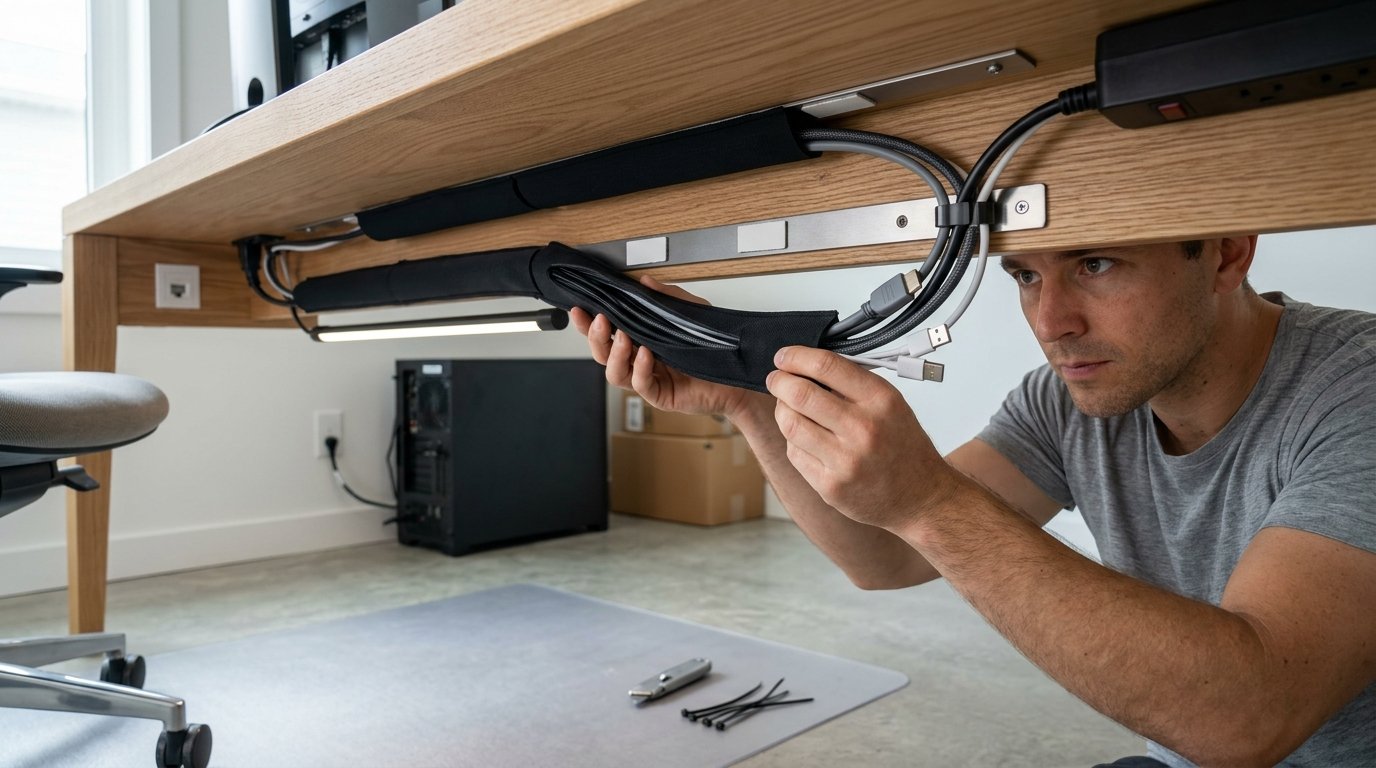
Proper physical alignment and quality material selection ensure long-term durability and daily comfort. Selecting ergonomic equipment tailored to your posture supports healthy spinal alignment during long hours. Aligning monitor display heights so the top third of the screen meets your natural seated eye level prevents unnecessary cervical spine flexion during long work shifts.
Integrating smart power distribution components, such as multi-outlet surge protectors rated at 1800 Joules and braided USB-C extension cords, keeps your workstation powered safely without creating dangerous cord trip hazards. Maintaining neutral wrist angles (between 90 to 100 degrees at the elbow joint) protects your median nerve from repetitive compression strain during intensive typing sessions.
In a properly configured diy remote work setup, every item on your desk should serve a distinct purpose. Keeping high-frequency items like your keyboard, mouse, and notepad within a primary reach zone of 14 inches prevents over-extension of your shoulder rotator cuff muscles throughout the day.
8. Apply Protective Polyurethane Desktop Finishes

Proper physical alignment and quality material selection ensure long-term durability and daily comfort. Selecting ergonomic equipment tailored to your posture supports healthy spinal alignment during long hours. Aligning monitor display heights so the top third of the screen meets your natural seated eye level prevents unnecessary cervical spine flexion during long work shifts.
Integrating smart power distribution components, such as multi-outlet surge protectors rated at 1800 Joules and braided USB-C extension cords, keeps your workstation powered safely without creating dangerous cord trip hazards. Maintaining neutral wrist angles (between 90 to 100 degrees at the elbow joint) protects your median nerve from repetitive compression strain during intensive typing sessions.
In a properly configured diy remote work setup, every item on your desk should serve a distinct purpose. Keeping high-frequency items like your keyboard, mouse, and notepad within a primary reach zone of 14 inches prevents over-extension of your shoulder rotator cuff muscles throughout the day.
Q: DIY Remote Work Setup Materials & Cost Breakdown
| Workstation Component | Budget-Friendly Approach | Premium Investment |
|---|---|---|
| Desk Surface & Frame | Compact tabletop with steel legs ($65) | Dual-motor electric standing frame ($480) |
| Ergonomic Seating | Breathable mesh task chair ($85) | Fully adjustable lumbar support chair ($350) |
| Lighting & Power | 6500K LED task desk lamp ($22) | Smart ambient lightbar & GaN dock ($140) |
“Small spatial adjustments compound into major long-term health benefits. Investing in proper focal angles and lumbar support transforms your daily working experience.”
— Ergonomic Design Principles
Q: Myth vs. Fact
Myth 1: You need a dedicated extra bedroom to build a productive home office.
Fact 1: Compact nooks, closets, and corner desks provide quiet, fully functional workspaces when arranged properly.
Myth 2: Expensive gear is required for good workstation posture.
Fact 2: Proper monitor height and neutral elbow angles depend on correct alignment, which can be achieved with low-cost risers.
Myth 3: Wireless peripherals always suffer from lag and battery failure.
Fact 3: Modern 2.4GHz wireless peripherals and Bluetooth 5.2 devices offer multi-month battery life and zero noticeable latency.
Myth 4: Cable management is purely for cosmetic appearances.
Fact 4: Organized cables prevent accidental unplugging, reduce electrical interference, and eliminate visual cognitive clutter.
Myth 5: Overhead room lighting is sufficient for computer work.
Fact 5: Overhead lighting creates severe glare on monitor screens; dedicated LED task lamps provide targeted illumination without glare.
Q: Frequently Asked Questions (FAQs)
Q: What is the minimum desk size needed for a home office?
A desktop measuring 36 inches wide by 20 inches deep is sufficient to support a laptop, external keyboard, mouse, and compact monitor stand.
Q: How do I prevent neck strain while working on a laptop?
Elevate your laptop screen using a portable stand so the top edge aligns with your eye level, and connect a separate USB keyboard and mouse.
Q: What is the best lighting color temperature for focus?
Cool white LED lighting between 4000K and 6500K enhances alertness and focus during daytime work hours, while warm 2700K lighting suits evening work.
Building a high-efficiency diy remote work setup is one of the best ways to upgrade your daily focus and long-term physical comfort. By combining smart desk placement, proper monitor height, and effective cable organization, you create a seamless working environment. For further technical guidelines on home office infrastructure, explore this resource on Do It Yourself craftsmanship principles. Also, check out our master guide on Dual Monitor Remote Work Setup for complete workstation alignment tips.
The Ultimate Guide to Baddiehub Fashion in 2026
5 Best Korean Skincare for Acne: The Ultimate Clear Skin Routine