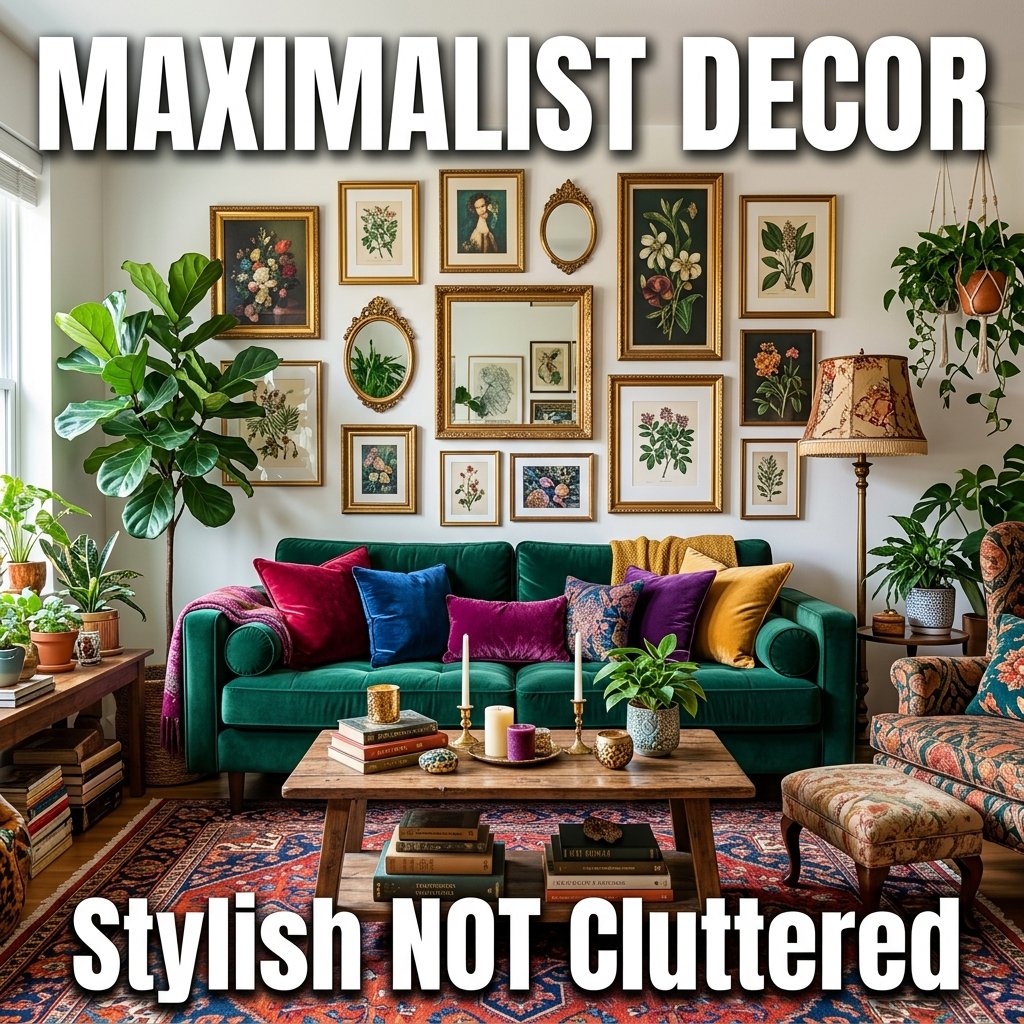
Maximalist Decor Ideas: How to Look Stylish, Not Cluttered
Drawing from years of professional interior styling consultations, If someone has ever called your decorating style “too much,” you are probably a maximalist at heart. But there is a real difference between maximalist decor ideas executed well and a room that simply feels chaotic. The best maximalist interiors feel abundant, personal, and deliberately curated. They tell a story. The ones that fail feel cluttered because they lack the organizing principles that give a bold space its coherence.
“Great interior styling isn’t about buying expensive furniture-it’s about creating spatial harmony and warm, intentional lighting.”
– Interior Design Insights
Getting maximalism right is not about buying more things. It is about understanding what makes a rich, layered space feel intentional rather than overwhelming.
Maximalist Decor Ideas That Look Stylish, Not Chaotic
The core principle of successful maximalism is that every element, no matter how many there are, must be connected by at least one common thread. That thread might be color, material, era, or theme. Without it, a room with many objects looks like a storage space. With it, the same room looks like a gallery.
1. Build Your Color Story First
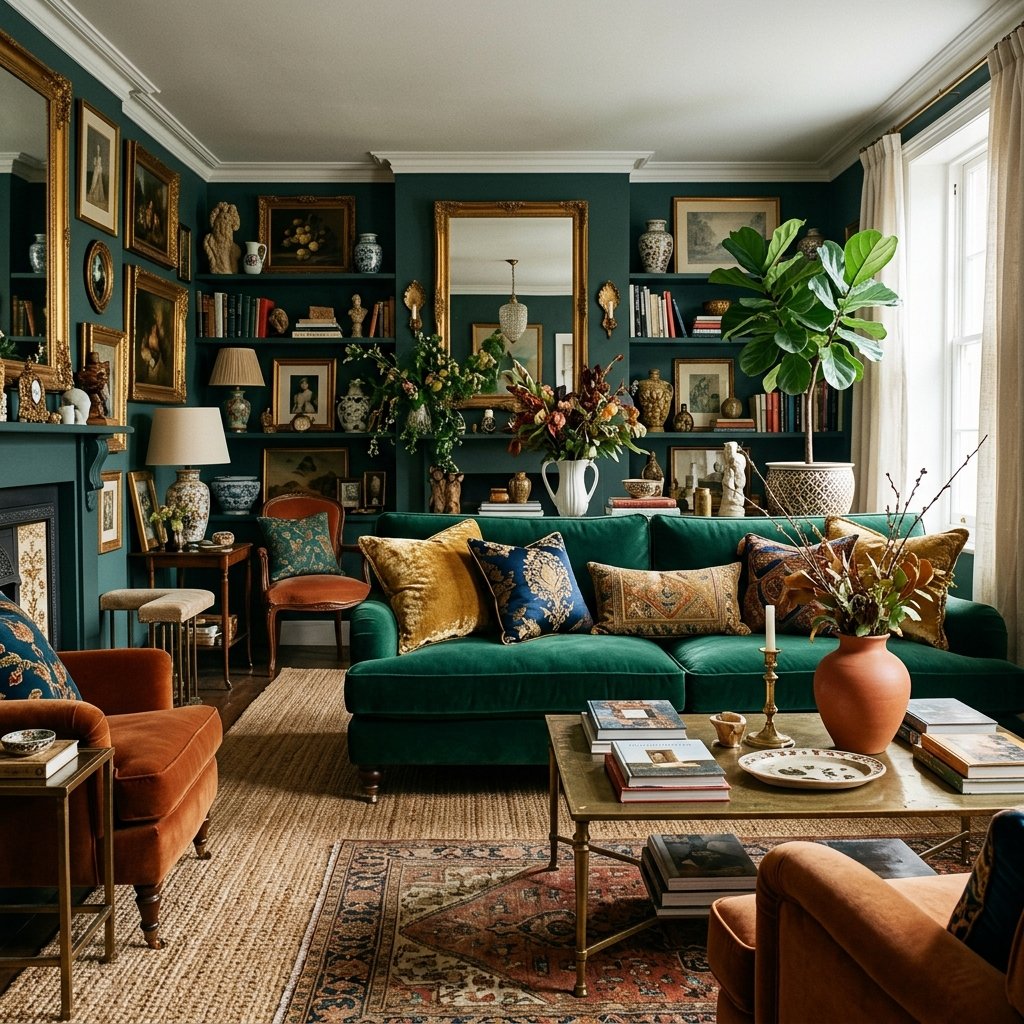
Maximalist rooms can handle many colors, but those colors need to work together. The most successful maximalist palettes have one dominant color (usually a deep jewel tone like emerald, sapphire, or burgundy), one or two secondary accent colors, and a neutral base that keeps the whole composition from becoming visually exhausting. An emerald sofa with gold accents, warm terracotta throw pillows, and a natural jute rug underneath is maximalist but not chaotic because the palette has clear hierarchy.
2. Create a Gallery Wall With a Framework
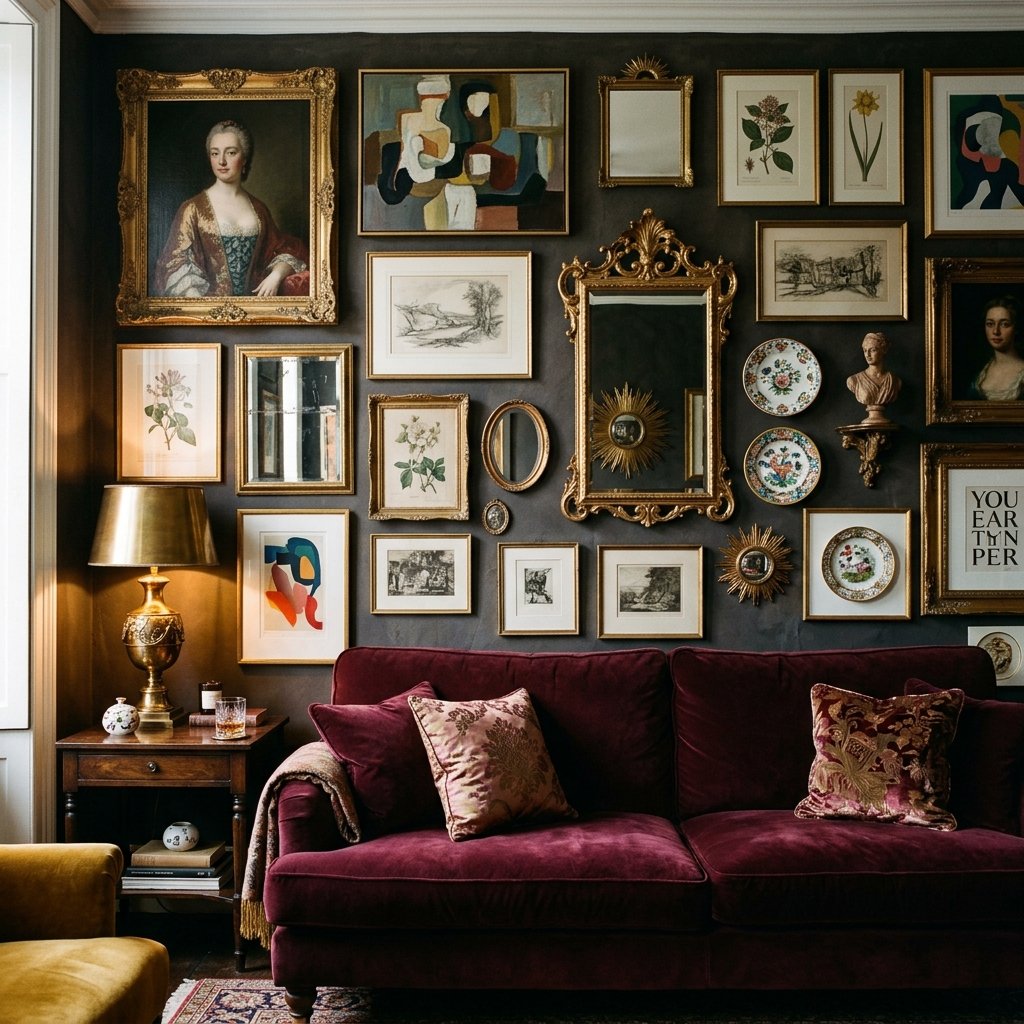
A gallery wall is one of the defining elements of maximalist interior design, but it fails when the frames, sizes, and subjects are genuinely random. The most visually satisfying gallery walls have one unifying factor. It might be a consistent frame finish (all gold, all black, all natural wood), a consistent color within the artwork (all pieces with at least one shade of blue), or a consistent subject matter (all portraits, all botanical prints). Within that framework, you can mix sizes, proportions, and styles freely.
3. Layer Textiles Intentionally
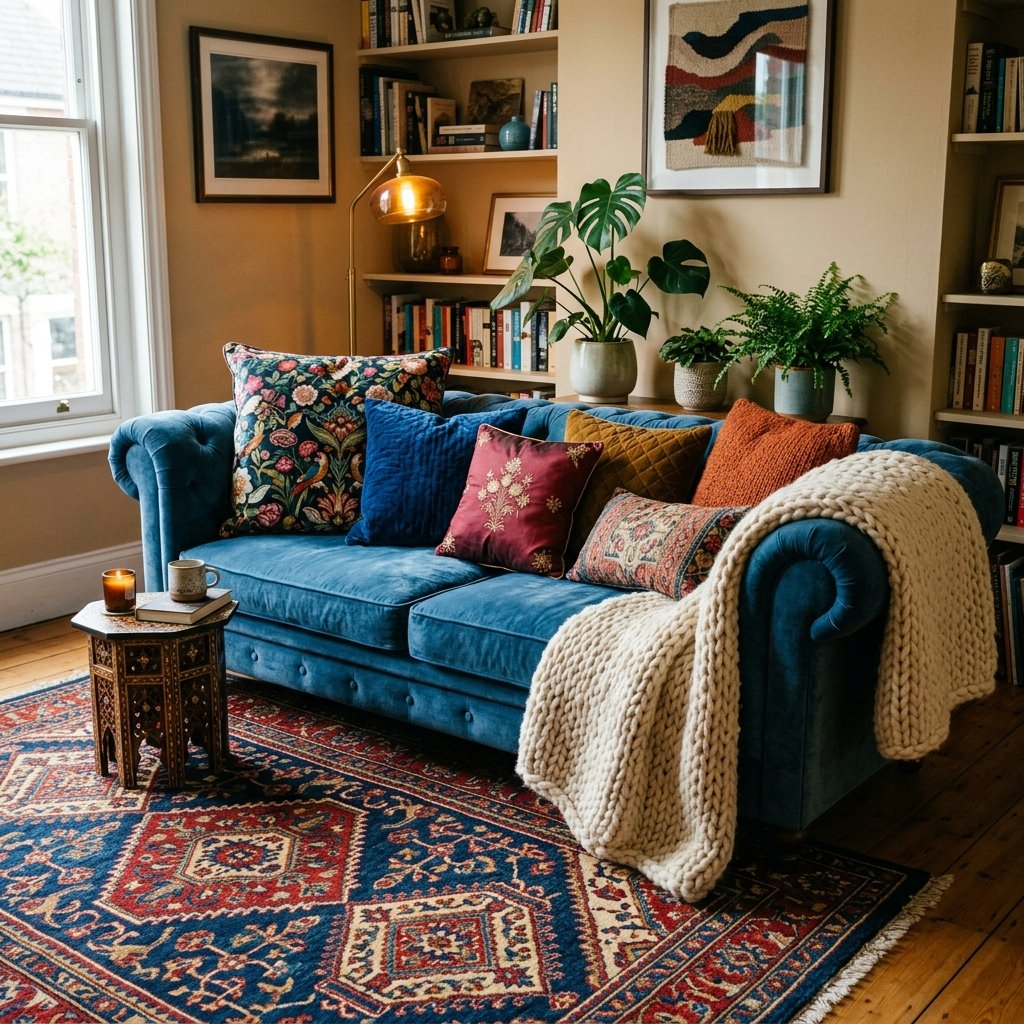
Maximalist bedrooms and living rooms almost always feature multiple layered textiles: a base rug with a smaller accent rug on top, multiple throw pillows in varying sizes and textures, a throw blanket draped over the arm of a sofa. The key to making this feel luxurious rather than messy is scale. Use one large-scale pattern (like a big floral or a geometric rug), pair it with medium-scale patterns in coordinating colors, and anchor everything with solid-colored pieces that give the eye somewhere to rest.
4. Use Velvet as Your Hero Fabric
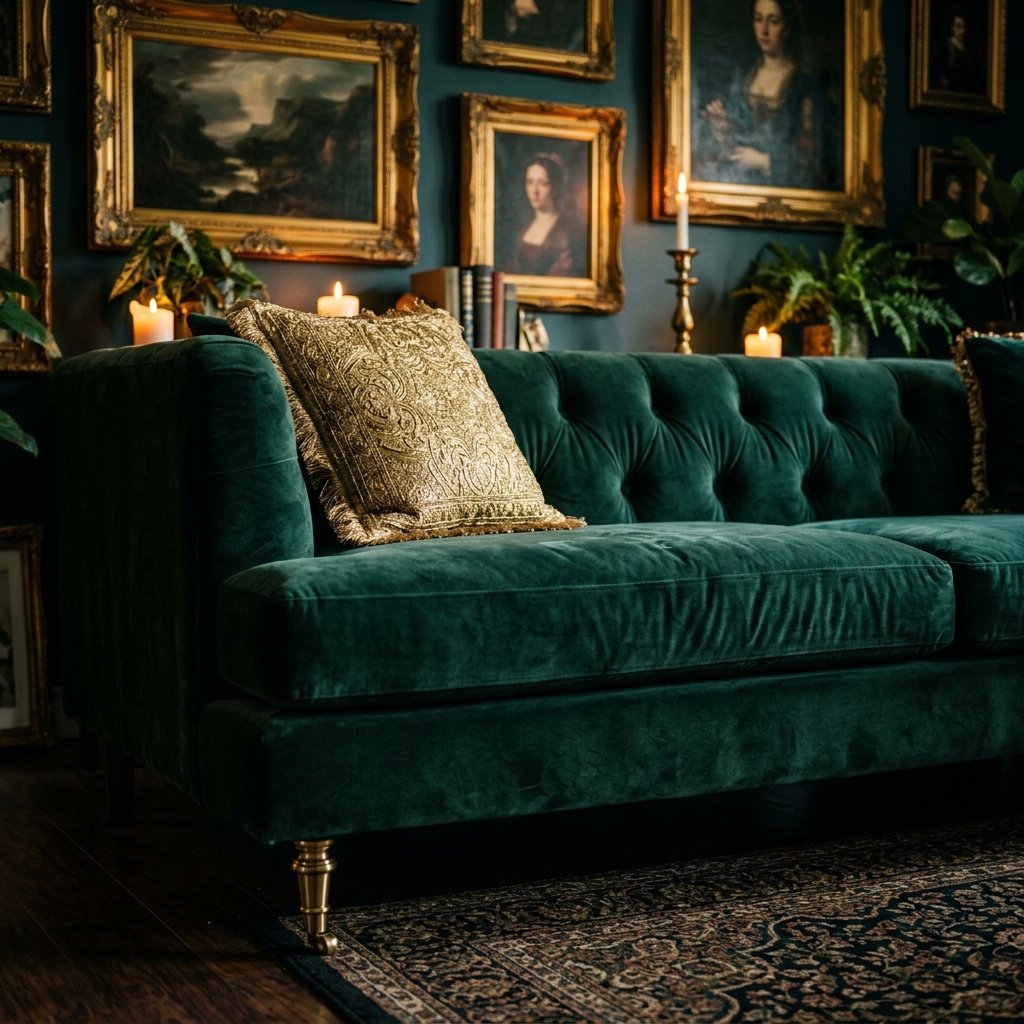
No fabric communicates maximalist luxury more efficiently than velvet. A velvet sofa in a deep color like forest green, dusty rose, or burnt orange immediately signals that a room is not playing it safe. Velvet also has a practical advantage: its texture shifts dramatically under different lighting conditions, which means a velvet piece looks different in the morning light versus candlelight, keeping a room feeling dynamic throughout the day.
5. Stack and Group Objects by Family
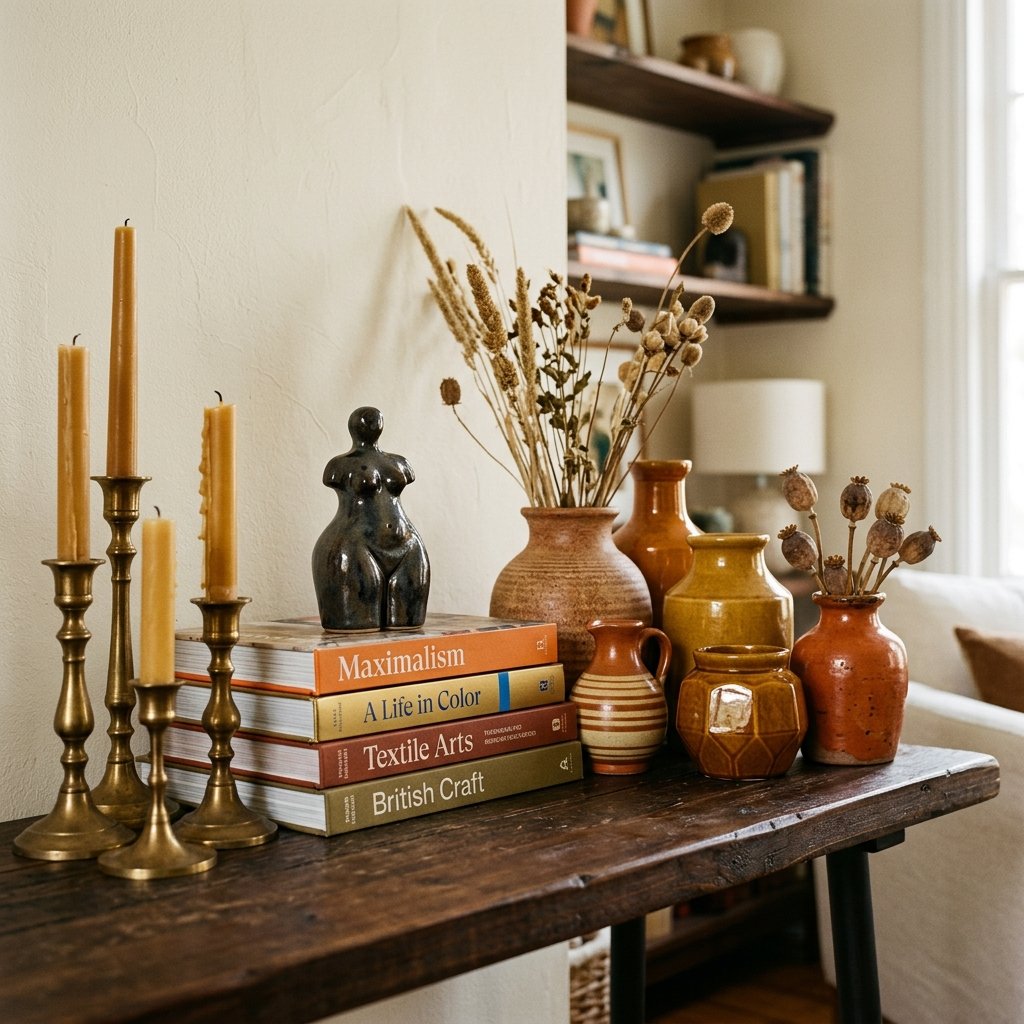
The difference between a curated vignette and a cluttered surface is grouping. Maximalist styling groups objects together by material, color, or theme rather than scattering them individually across a space. Three brass candlesticks of varying heights grouped together on a shelf look intentional. Those same three candlesticks placed in different corners of a room look forgotten. Grouping is the single most important organizational tool in maximalist decorating.
6. Mix Eras and Styles Deliberately
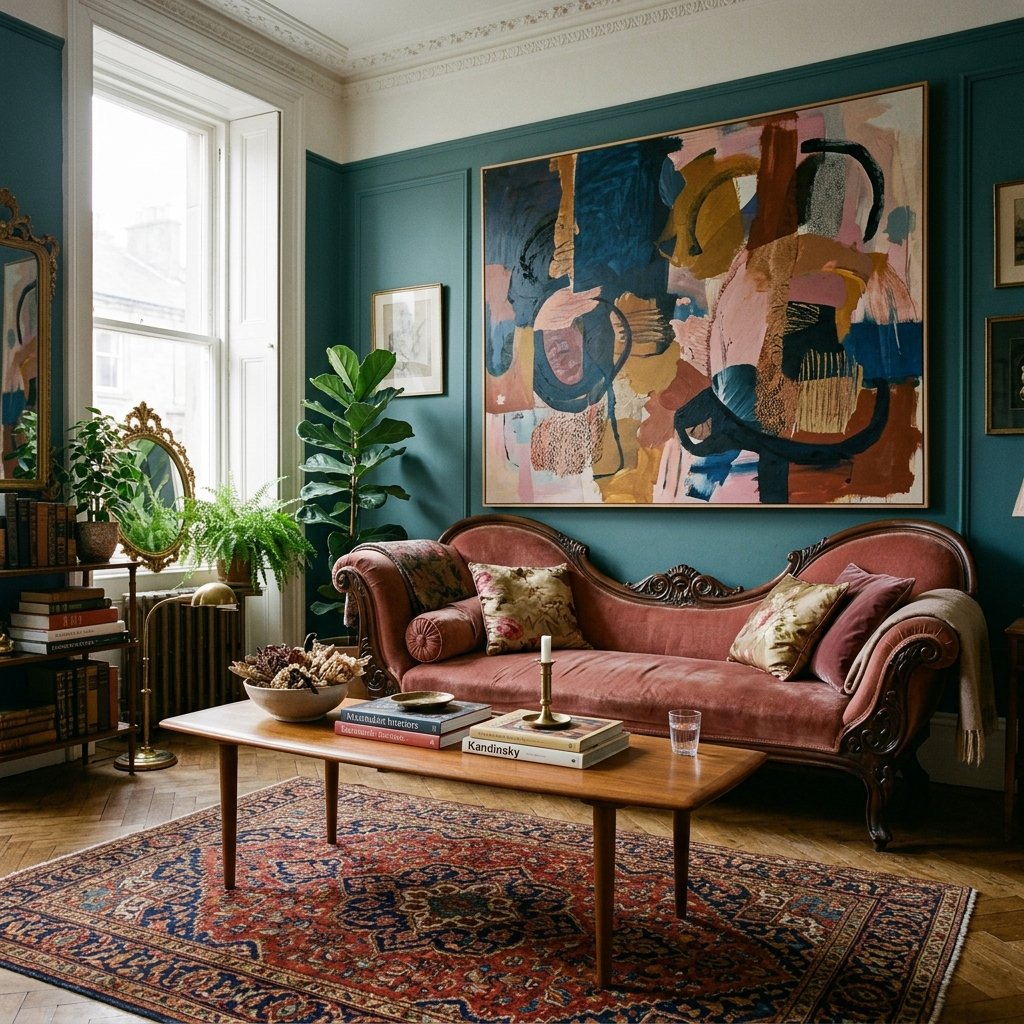
Maximalism thrives on the tension between different periods and styles. A Victorian chaise lounge against a contemporary abstract painting. A traditional Persian rug under a mid-century modern coffee table. These combinations work because they are deliberate. The style mixing is a feature, not an accident. According to House Beautiful, the best maximalist rooms typically span at least three different design eras, which creates the layered, collected-over-time quality that makes a space feel genuinely rich.
7. Let Plants Earn Their Place
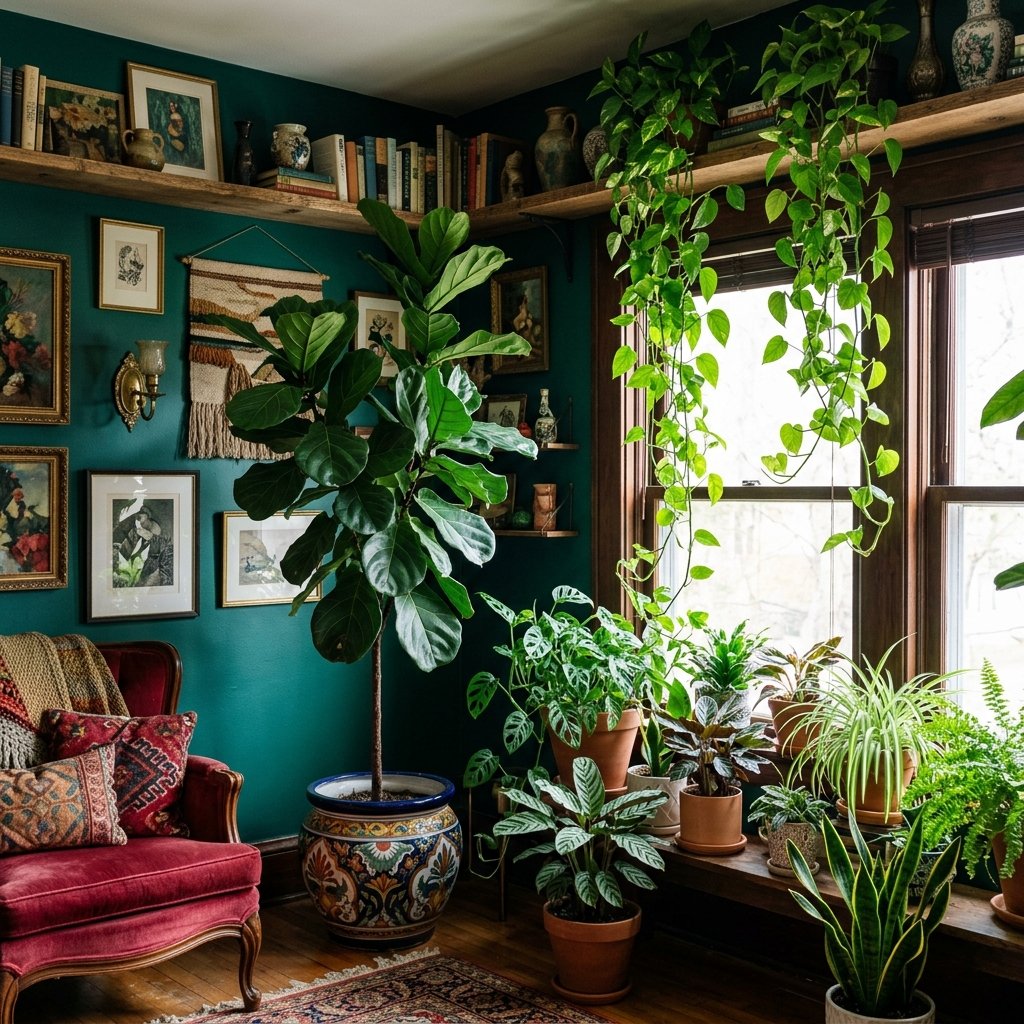
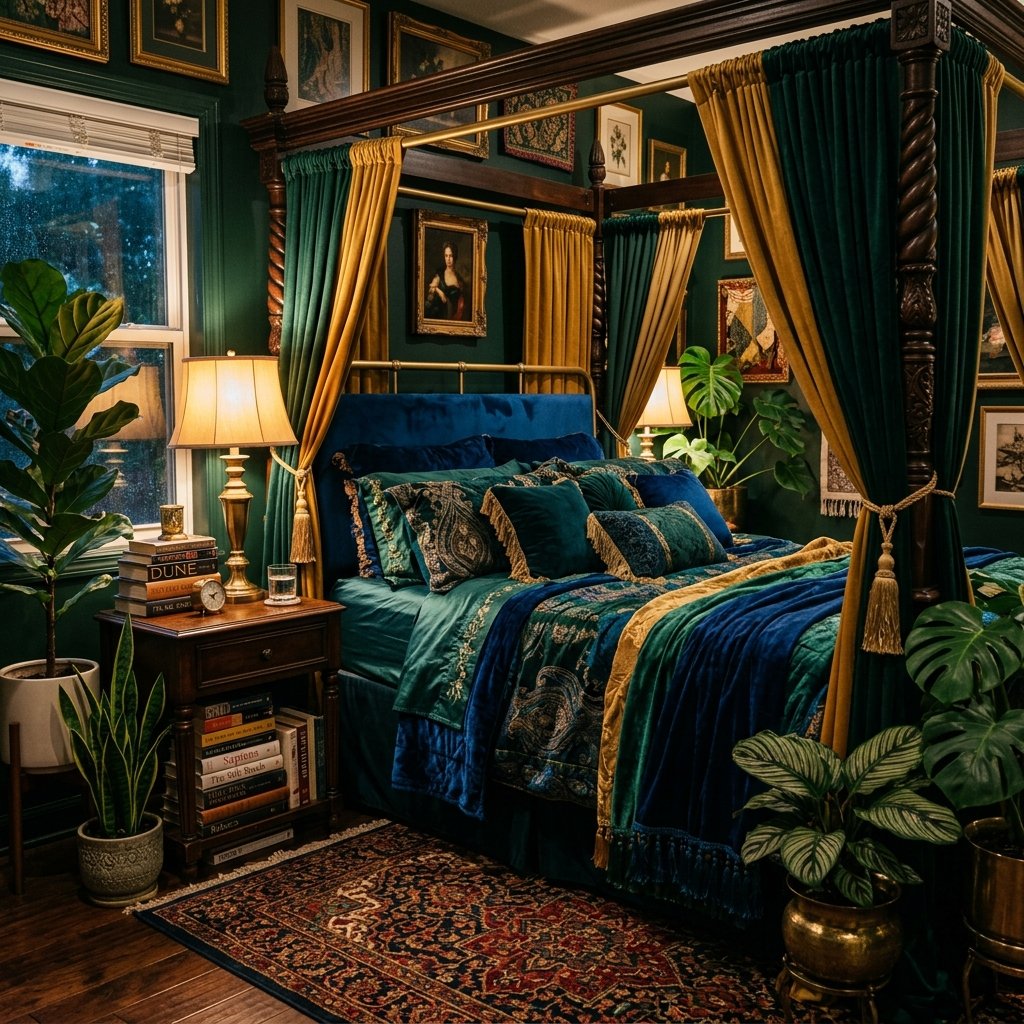
Maximalist interiors benefit enormously from lush, full plants because organic forms break up the visual density of objects and patterns. A large fiddle leaf fig in a bold ceramic pot, trailing pothos from a high shelf, a cluster of smaller plants grouped on a window sill. The key is scale: in a maximalist room, small plants can get lost. Go for at least one dramatic, large-scale plant that commands genuine attention.
The Rules That Prevent Maximalism From Becoming Mess
There are a few non-negotiable principles that separate styled maximalism from plain clutter. The first is that the floor must remain relatively clear. In a room with many objects and surfaces, clear floor space gives the eye a visual reset. The second is that every wall cannot be equally busy. Even in the most maximalist home, there should be at least one wall that serves as a visual rest point, either a single strong color or an unadorned surface.
The third rule is practical: storage must be invisible. Hidden storage for everyday functional items (remotes, cables, mail, cleaning supplies) is what allows the displayed objects to feel like intentional choices rather than overflow. Learn more about creating a beautifully grounded home in our guide to wabi-sabi home decor ideas for contrast and balance.
The maximalist rooms that genuinely stop you in your tracks share one quality: they feel like they were accumulated by someone who has lived a full, curious, engaged life rather than assembled in a single shopping trip. You can buy a lot of things and still not achieve that quality. It comes from editing as much as it comes from adding.
Frequently Asked Questions
How do I know if my room is maximalist or just cluttered?
Ask yourself whether each item in the room was placed there intentionally or whether it ended up there by default. A maximalist room has many things in it, but each thing was chosen and positioned deliberately. Clutter is the accumulation of things that never had a designated place to begin with.
What is the easiest maximalist change to make in a neutral room?
Add a gallery wall. It is the single change that most dramatically shifts a neutral, minimal room toward a maximalist aesthetic without requiring new furniture. Use a consistent frame finish and mix sizes freely within that constraint.
Can maximalism work in small spaces?
Yes. Small maximalist spaces actually work very well because the density of objects creates an intimate, cozy atmosphere rather than an overwhelming one. The key in small spaces is vertical layering: use shelves, stack items up the wall, and use tall furniture to draw the eye upward, creating the impression of height and volume.
What colors work best for a maximalist interior?
Deep jewel tones (emerald, sapphire, amethyst, burgundy) are the most universally successful maximalist palette. They read as rich and intentional rather than chaotic. Pair them with warm metallics (gold, brass, bronze) and natural neutrals (jute, linen, raw wood) for a layered but coherent result. For more on interiors, check out Architectural Digest’s maximalist home tours.
Maximalism done right is one of the most personal, expressive, and genuinely enjoyable approaches to interior design available. The goal is not to have more things. The goal is to create a space that feels abundant, intentional, and completely yours.