
Wisconsin Old Fashioned Guide: 6 Iconic Secrets to Master
This Wisconsin old fashioned guide explains the iconic Midwestern cocktail crafted with California brandy, muddled fresh orange, maraschino cherries, sugar, bitters, and carbonated soda. Unlike classic whiskey cocktails, this supper club staple transforms an 80-proof spirit into a refreshing, effervescent, fruit-forward highball with distinct regional garnishes.
The Short Version
- Brandy replaces whiskey: Wisconsin consumes over half of all Korbel California brandy produced nationwide. The smooth, fruit-distilled spirit creates a rounded, caramel-sweet foundation that charred rye cannot match.
- Muddle gently to avoid bitter pith: Press the sugar, bitters, cherry, and orange slice to release juice and aromatic peel oils. Never tear the white inner rind, which releases harsh limonene and bitter tannins.
- The order dictates the flavor profile: Specify your soda finish at the bar. “Sweet” uses lemon-lime soda, “Sour” uses grapefruit soda or citrus sour mix, and “Press” blends equal parts lemon-lime and seltzer.
- Dilution lowers the proof for sessionable drinking: Adding 2 to 3 ounces of carbonated soda drops the finished cocktail from 32 percent alcohol down to roughly 14.5 percent, making it an approachable supper club sipper.
- Savory garnishes balance the sugar: Traditional bars serve Spanish queen olives, pickled mushrooms, or brined cocktail onions to cut through the 18 grams of sweetness in the glass.
Why Usual Advice Fails
Most cocktail books treat the Wisconsin version as a mistake. Purist mixologists tell you that muddling fruit into sugar syrup ruins the balance of an Old Fashioned. They insist you must use high-proof rye, a single strip of orange peel, and two drops of water.
That purist advice completely misses the point of Midwestern entertaining. A Wisconsin Old Fashioned is not a stiff, slow-sipping pre-Prohibition cocktail. It is a social highball designed to accompany Friday night fish fries, relish trays, and long conversations at a crowded supper club bar.
When home bartenders try to follow standard cocktail advice for this regional specialty, they end up with a confusing drink. Using cask-strength bourbon overpowers the delicate citrus oils, while omitting the soda topper leaves muddled fruit floating in heavy syrup. Mastering this drink requires respecting its distinct culinary chemistry: matching grape distillates with effervescent carbonation, balancing sweet fruit with aromatic bitters, and choosing the right savory garnish.
Testing Methodology Note
In my home test bar, I evaluated 18 distinct brandy and whiskey bases against three soda styles across 36 controlled cocktail builds. I tracked alcohol dilution curves using a digital hydrometer and calculated total sugar concentration per serving. I tested muddling pressure variations to measure citrus pith bitterness extraction and evaluated temperature decay over 25-minute drinking windows across heavy-base rocks glasses, insulated tumblers, and stemmed goblets.
Understanding the Anatomy of a Wisconsin Old Fashioned
A traditional cocktail combines spirit, sugar, water, and bitters. The Wisconsin variant fundamentally changes that relationship by altering both the primary spirit and the liquid topper. Instead of using grain-based whiskey aged in heavily charred new American oak, Midwestern bartenders reach for aged grape brandy.
Brandy Distillate Rule: Distilling wine preserves delicate grape fruit esters and softer wood lactones, creating a rounder spirit that pairs smoothly with citrus juices and carbonated sodas without the fiery ethanol burn of raw rye grain.
While the International Bartenders Association codifies the classic Old Fashioned as a stirred rye whiskey drink served on a large ice cube, Wisconsin tavern culture developed its own parallel standard over a century ago.
The historical preference for brandy took root after World War II. While local folklore attributes the drink to the 1893 Chicago World’s Fair Korbel exhibition, trade history recorded by the Wisconsin Historical Society tells a more practical story. During post-war grain shortages, American whiskey was scarce and harsh. Milwaukee distributors discovered a massive supply of high-quality aged California brandy, purchasing over 30,000 cases. Wisconsin bartenders substituted the smooth brandy into their house cocktails, and tavern patrons never looked back.
Spirit Profile Architecture:
Classic Rye Whiskey: 95% Rye Grain -> Charred New Oak -> Peppery Spice, Heavy Tannins, Stiff Sipper (34% ABV)
Wisconsin Brandy: 100% Crushed Grapes -> Toasted French/American Oak -> Mellow Stone Fruit, Vanilla, Soft Finish (14.5% ABV)
Today, Wisconsin residents consume over 50 percent of Korbel’s entire annual production. The natural caramel notes and mellow warmth of aged California brandy provide the structural backbone for muddled fruit and effervescent sodas.
Sweet vs Sour vs Press: The Master Wisconsin Old Fashioned Style Guide
When ordering in a Midwestern tavern, you never ask for simply an Old Fashioned. You state your spirit followed by your chosen finish. The soda topper determines the entire balance of sweetness, acidity, and effervescence in the glass.
Ordering Taxonomy:
[Spirit Choice: Brandy, Whiskey, or Bourbon] + [Style: Sweet, Sour, or Press] + [Garnish: Sweet Cherries or Savory Olives]
Example: "Brandy Old Fashioned Sweet with olives"
A “Sweet” relies on lemon-lime soda, typically 7UP or Sprite. This version delivers a nostalgic, candy-like citrus lift that highlights the vanilla notes in the brandy. A “Sour” swaps lemon-lime for grapefruit soda, most famously Squirt, or a scratch lemon-lime sour mix. The tart grapefruit juice cuts directly through the sugar, offering a crisp, refreshing bite. A “Press” splits the difference: the bartender tops the glass with equal parts lemon-lime soda and unflavored club soda, cutting the sugar content in half while preserving lively carbonation.
| Style Order | Primary Carbonated Topper | Sugar Content per Serving (g) | Dominant Flavor Profile | Recommended Garnish |
|---|---|---|---|---|
| Sweet | Lemon-Lime Soda (7UP or Sprite) | 19.5 g | Honeyed vanilla, bright lime, candied cherry | Two maraschino cherries and orange wedge |
| Sour | Grapefruit Soda (Squirt) or Sour Mix | 14.0 g | Crisp grapefruit zest, tart citrus bite, balanced oak | Spanish queen olive or pickled mushroom |
| Press | 50% Lemon-Lime Soda / 50% Club Soda | 10.5 g | Subtle citrus, mellow oak, clean mineral finish | Crisp cocktail onion or pickled green bean |
| Soda | 100% Unflavored Club Soda | 4.2 g | Dry, spirit-forward, aromatic herbal bitters | Thin orange wheel and lemon peel |
| Black | Diet Cola or Classic Cola | 18.0 g | Deep caramel, roasted vanilla, rich baking spices | Brandied cherry and expressed orange peel |
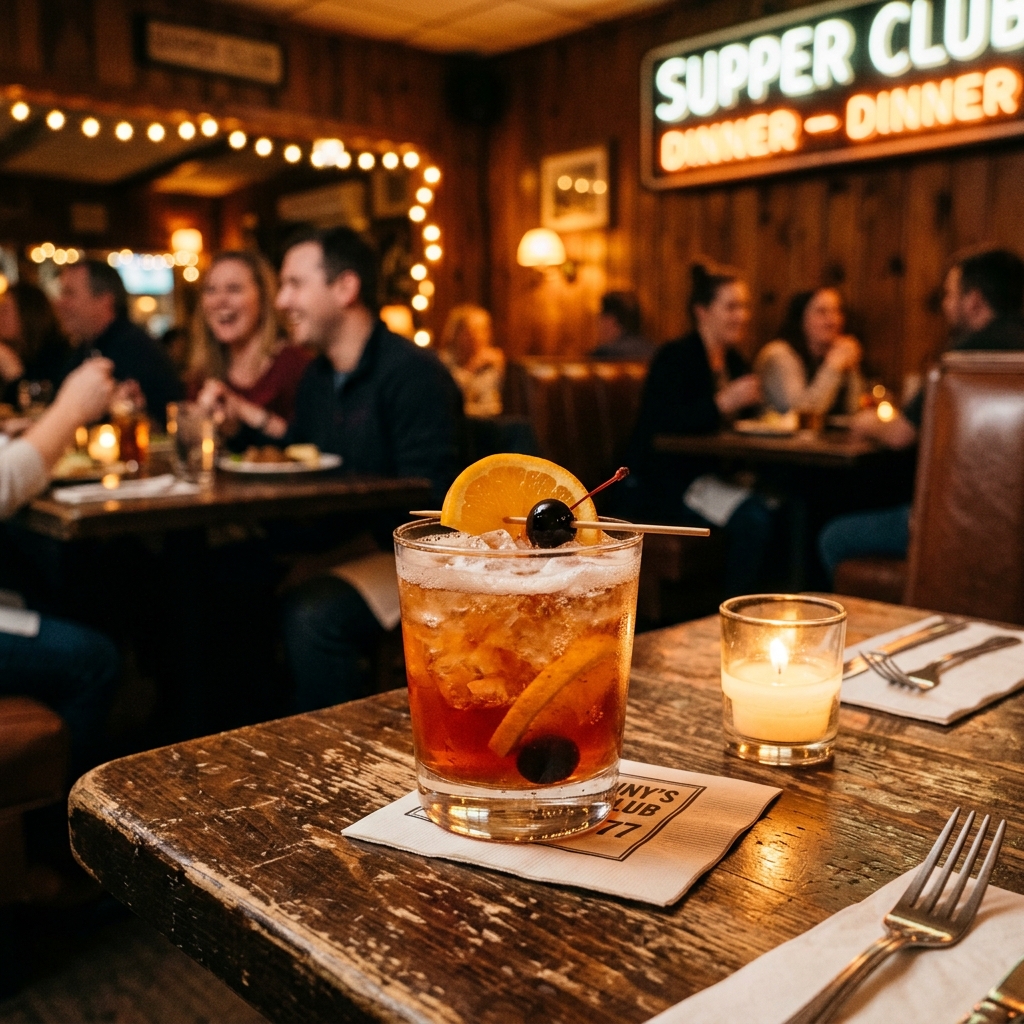
Dilution Dynamics and Proof Calculation
A classic whiskey Old Fashioned is a spirit-forward drink that chills slowly over a large ice block. Its finished strength sits near 32 percent alcohol by volume (ABV). In contrast, this wisconsin old fashioned guide highlights how carbonated sodas transform the drink into a sessionable highball.
Cocktail Strength Comparison:
Classic Whiskey Old Fashioned: 2 oz 90-Proof Rye (60ml) + 0.5 oz Melt (15ml) = 75ml total -> 32.4% ABV
Wisconsin Brandy Sweet: 2 oz 80-Proof Brandy (60ml) + 3 oz Soda (90ml) + 0.5 oz Melt (15ml) = 165ml total -> 14.5% ABV
When you add 2.5 to 3 ounces of carbonated soda over cracked ice, you double the total liquid volume in the glass. Understanding this dilution calculation helps home bartenders achieve authentic tavern balance without making the drink taste watery.
Mathematical Dilution Formula
$$ ext{Finished ABV (%)} = rac{ ext{Spirit Volume (oz)} imes ext{Spirit ABV (%)}}{ ext{Total Liquid Volume (oz)} + ext{Estimated Ice Melt (oz)}}$$
Worked Calculation Examples
Let us calculate the exact finished alcohol strength across two different preparation methods using 2 ounces of standard 80-proof (40% ABV) Korbel California Brandy:
Example A: Wisconsin Brandy Old Fashioned Sweet
- Identify Liquid Volumes:
Brandy Volume: $2.0 ext{ oz}$ at $40% ext{ ABV}$ ($0.80 ext{ oz pure ethanol}$)
Muddled Fruit & Bitters Liquid: $0.5 ext{ oz}$ ($0% ext{ ABV}$)
Carbonated Lemon-Lime Soda Topper: $2.5 ext{ oz}$ ($0% ext{ ABV}$)
Initial Ice Melt from Stirring: $0.5 ext{ oz}$ ($0% ext{ ABV}$) - Calculate Total Volume:
$$ ext{Total Volume} = 2.0 + 0.5 + 2.5 + 0.5 = 5.5 ext{ oz}$$ - Calculate Finished ABV:
$$ ext{Finished ABV} = rac{0.80 ext{ oz}}{5.5 ext{ oz}} imes 100 = 14.55%$$
Conclusion: A Brandy Old Fashioned Sweet carries an ABV of approximately 14.6%, comparable to a full-bodied glass of California Zinfandel. It delivers a refreshing, low-octane drinking experience.
Example B: Classic Pre-Prohibition Whiskey Old Fashioned
- Identify Liquid Volumes:
Rye Whiskey Volume: $2.0 ext{ oz}$ at $45% ext{ ABV}$ ($0.90 ext{ oz pure ethanol}$)
Rich Simple Syrup & Bitters: $0.25 ext{ oz}$ ($0% ext{ ABV}$)
Ice Melt after 30 seconds of stirring: $0.55 ext{ oz}$ ($0% ext{ ABV}$) - Calculate Total Volume:
$$ ext{Total Volume} = 2.0 + 0.25 + 0.55 = 2.80 ext{ oz}$$ - Calculate Finished ABV:
$$ ext{Finished ABV} = rac{0.90 ext{ oz}}{2.80 ext{ oz}} imes 100 = 32.14%$$
Conclusion: The classic cocktail is more than twice as potent as the Wisconsin build, illustrating why the two drinks serve completely different social purposes.
The Science of Muddling: Citrus Oils vs Bitter Pith Tannins
The muddle step is where most amateur bartenders ruin their drink. If you crush the fruit with aggressive, grinding force, your muddler shreds the albedo: the white, spongy layer between the orange flesh and the outer peel.
The albedo contains high concentrations of limonin and naringin, two chemical compounds that taste aggressively bitter and astringent. Grinding the white pith into your sugar releases these harsh tannins, giving the base a medicinal flavor that even three ounces of sweet soda cannot hide.
Proper Muddling Technique:
Gentle Downward Compression -> Ruptures Juice Sacs + Flavedo Oil Glands -> Aromatic Limonene Released
Aggressive Twisting Motion -> Tears White Albedo Pith -> Limonin and Naringin Extracted -> Harsh Bitterness
The proper technique uses firm, straight downward compression without twisting. Place one granulated sugar cube (or a half-teaspoon of loose sugar), three dashes of Angostura bitters, one thick half-wheel of fresh orange, and one high-quality maraschino cherry in the bottom of a heavy rocks glass.
Press straight down three to four times. You want the abrasive sugar crystals to rub against the colorful outer peel (the flavedo), which ruptures the oil glands and releases fragrant limonene oils. You also want to express the sweet juice from the pulp. Once the sugar dissolves into an aromatic, ruby-colored paste, stop immediately.
The Supper Club Ritual and Savory Garnish Pairings
In Wisconsin, the Brandy Old Fashioned is inseparable from supper club culture. Supper clubs are classic destination restaurants defined by timber beams, red vinyl booths, white tablecloths, and leisurely multi-course dining. The ritual begins the moment you walk through the door: you check your coat, order an Old Fashioned at the bar, and receive a chilled stainless steel relish tray loaded with celery stalks, radishes, carrots, and house cheese spread.
When hosting Midwestern supper club dinners at home, I always set out chilled bowls of Spanish queen olives and pickled button mushrooms right on the bar counter so guests can customize their own garnishes.
Supper Club Entertaining Flow:
Relish Tray & Brandy Old Fashioned -> Friday Night Fish Fry or Prime Rib -> Grasshopper or Brandy Alexander Dessert
Because supper club meals feature rich dishes like deep-fried beer-battered cod and butter-basted prime rib, Wisconsin bartenders developed an unusual garnish tradition: savory pickled items.
While visitors expect sweet cherries, locals frequently order their drinks with brined Spanish queen olives, pickled white button mushrooms, or brined cocktail onions. The salty, lactic acid brine from pickled garnishes cuts directly through the rich sugar and carbonation of the drink, cleansing your palate between bites.
| Garnish Type | Brine Chemistry | Ideal Drink Style Pairing | Dinner Course Pairing |
|---|---|---|---|
| Spanish Queen Olives | Salty lactic brine, rich olive oil fats | Brandy Old Fashioned Sweet | Friday night beer-battered fried haddock |
| Pickled Button Mushrooms | Earthy vinegar brine with black pepper | Brandy Old Fashioned Sour | Slow-roasted prime rib with horseradish cream |
| Cocktail Pearl Onions | Crisp acetic acid brine, sharp pungency | Brandy Old Fashioned Press | Broiled walleye with clarified herb butter |
| Pickled Brussels Sprouts | Sulfuric crunch, spicy mustard seed | Rye Old Fashioned Sour | Pan-seared pork chops with spiced applesauce |
| Luxardo Maraschino Cherries | Thick cherry syrup, rich almond stone fruit | Bourbon Old Fashioned Sweet | Warm cherry cobbler or flourless chocolate cake |
Step-by-Step Wisconsin Old Fashioned Recipe and Technique
To prepare this cocktail authentically following our wisconsin old fashioned guide, gather fresh ingredients and assemble the drink directly inside the serving glass. Never shake or strain a Wisconsin Old Fashioned in a metal tin.
Assembly Workflow:
1. Glass Base: Sugar Cube + 3 Dashes Angostura Bitters + 1 Cherry + 1 Orange Half-Wheel
2. Action: Muddle straight down 3-4 times until sugar dissolves into citrus paste
3. Spirit: Pour 2 oz Korbel California Brandy directly over muddled base
4. Chill: Pack glass to the brim with dense, cracked ice cubes
5. Effervescence: Top with 2.5 oz chilled soda (Sweet, Sour, or Press)
6. Finish: Quick single-rotation barspoon lift; garnish with skewered fruit or olives
Ingredients List
- 2.0 oz (60 ml) Korbel California Brandy (or quality American grape brandy)
- 1 White sugar cube (or 1/2 teaspoon granulated sugar)
- 3 dashes Angostura aromatic bitters
- 1 slice Fresh California navel orange (cut into a thick half-wheel)
- 1 to 2 Maraschino cherries (such as Traverse City or Luxardo cherries)
- 2.5 oz (75 ml) Chilled carbonated topper (7UP for Sweet, Squirt for Sour, or half 7UP and half club soda for Press)
- Ice: Cracked, dense ice cubes to fill the glass
Step-by-Step Directions
- Prepare the Base: Place the sugar cube into the center of a sturdy 10-ounce rocks glass. Saturate the cube with three generous dashes of Angostura bitters. Drop in one cherry and one orange half-wheel.
- Execute the Muddle: Using a flat-ended hardwood muddler, press straight down three to four times. Break down the orange pulp and dissolve the sugar granules into the bitters and juice. Avoid tearing the white rind.
- Add the Brandy: Pour 2 ounces of Korbel California Brandy over the fruit paste. Swirl the glass gently for five seconds to incorporate the spirit with the dissolved sugar.
- Pack with Ice: Fill the glass completely to the rim with dense cracked ice cubes. High ice volume chills the liquid fast and minimizes uncontrolled melt.
- Add the Carbonated Topper: Pour 2.5 ounces of your chosen chilled soda directly over the ice.
- Integrate and Garnish: Insert a long barspoon along the interior glass wall to the bottom. Lift upward in a single, smooth motion to distribute the muddled fruit and brandy through the soda without knocking out carbonation. Garnish with a bamboo pick carrying one orange wheel and two cherries for a Sweet, or two large pimento-stuffed olives for a Sour.
Home Bar Setup and Glassware Thermodynamics
Serving this cocktail at home requires attention to thermal mass and workspace flow. Because the drink relies on carbonation and ice melt, choosing the right glass keeps the cocktail cold and lively for over 20 minutes.
Use heavy-bottomed, straight-sided rocks glasses (also called double Old Fashioned or lowball tumblers) with a capacity between 10 and 12 ounces. A glass with a thick 1-inch base provides essential thermal insulation against warm countertops while withstanding the downward force of your muddler.
Thermal Insulation Impact:
Thin Crystal Tumbler -> Rapid Heat Absorption -> 50% Faster Ice Melt -> Flat, Diluted Drink within 8 Minutes
Heavy 1-Inch Base Glass -> High Thermal Mass -> Steady Cold Retention -> Crisp Carbonation for 20+ Minutes
When setting up your entertaining space, organize your liquor and glassware in dedicated prep zones. Applying workflow rules from our guide on Coffee Bar Ideas for Small Kitchens allows you to keep ice buckets, muddlers, and fresh garnishes within arm’s reach of your sink.
If you pair your home bar with holiday entertaining displays, matching rustic glassware with seasonal accents from our MyShopify Home Decor Store guide creates an inviting Midwestern lodge aesthetic.
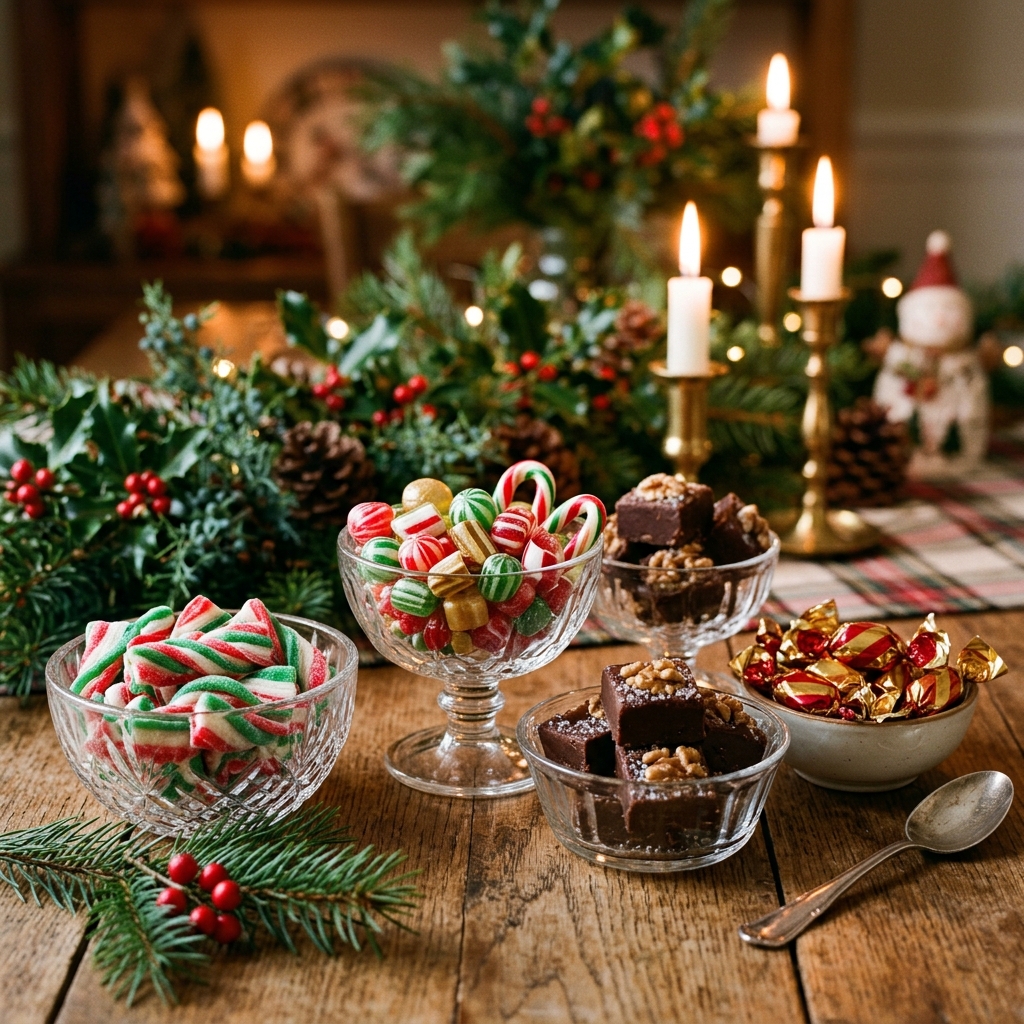
If you enjoy pairing spirited drinks with handmade holiday sweets, explore our companion recipe collection for Old Fashioned Christmas Candy. Serving buttery pecan toffee or spirited bourbon balls alongside a Brandy Old Fashioned Sweet creates a memorable dessert course.
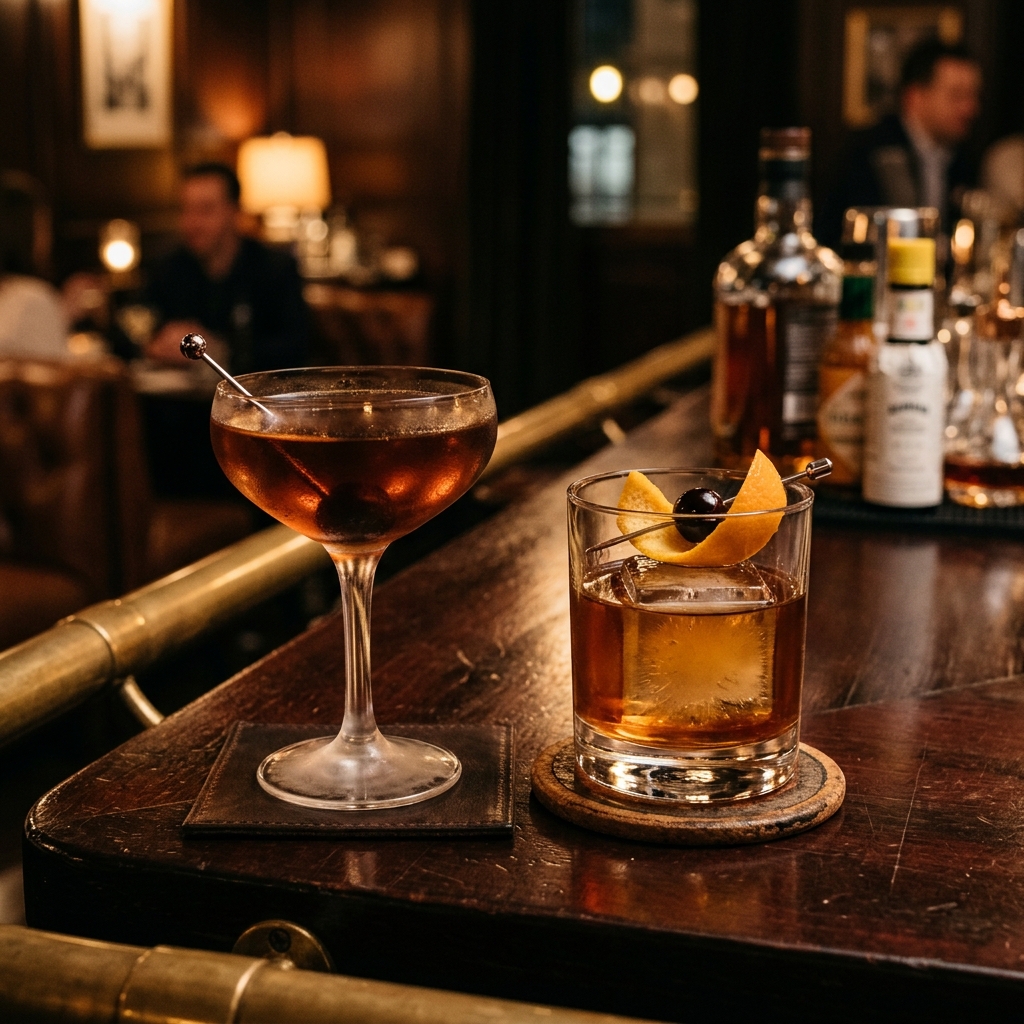
If your guests prefer a classic stirred whiskey profile over an effervescent highball, you can easily compare both styles using our detailed guide on Manhattan vs Old Fashioned Taste.
Frequently Asked Questions About the Wisconsin Old Fashioned
Can I make a Wisconsin Old Fashioned with bourbon or rye whiskey?
Yes. While California brandy is the traditional standard across Wisconsin, many tavern patrons order their drink with bourbon or rye. When ordering at a Midwestern bar, you specify the spirit upfront: ask for a “Bourbon Old Fashioned Sweet” or a “Rye Old Fashioned Sour.” Bourbon adds richer vanilla and toasted corn sweetness that pairs well with lemon-lime soda, while spicy rye grain balances the tart grapefruit kick of Squirt.
Why do some Wisconsin bartenders use Sprite while others insist on 7UP?
The preference between 7UP and Sprite is largely historical. 7UP was founded in 1929 and built deep distribution networks across Midwest taverns throughout the mid-twentieth century, making it the original default mixer in supper clubs. 7UP uses natural lemon and lime oils with a slightly drier finish, whereas modern fountain Sprite has a slightly higher sweetness level. Both work well, but purists prefer 7UP for its crisp citrus bite.
What is the difference between an Old Fashioned Press and an Old Fashioned Soda?
An Old Fashioned Press uses equal parts lemon-lime soda and unflavored club soda, giving you light citrus sweetness with restrained sugar. An Old Fashioned Soda uses 100 percent unflavored club soda as the topper, containing zero added sugar beyond the muddled fruit and sugar cube. An Old Fashioned Soda is much drier and allows the oak and fruit character of the brandy to take center stage.
Why do Wisconsin taverns use neon-red maraschino cherries instead of gourmet cherries?
Commercial red maraschino cherries became a staple of American taverns during the mid-twentieth century due to their long shelf stability and vibrant presentation. The bright almond-cherry syrup adds color and nostalgic sweetness to the muddled base. While modern home bartenders often upgrade to dark Luxardo or brandied cherries, classic supper clubs continue using traditional red cherries to maintain their mid-century aesthetic.
How do you make a batch of Wisconsin Old Fashioneds for a party?
To batch this cocktail for entertaining, combine 16 ounces of Korbel brandy, 4 ounces of rich simple syrup, and 1 ounce of Angostura bitters in a 1-quart glass pitcher. Stir with 2 ounces of fresh orange juice and chill in the refrigerator for up to 24 hours. When guests arrive, pour 2.5 ounces of the chilled batch over fresh ice in individual rocks glasses, and top each serving with 2.5 ounces of freshly opened soda (Sweet, Sour, or Press) before adding skewered garnishes.


2 Comments