
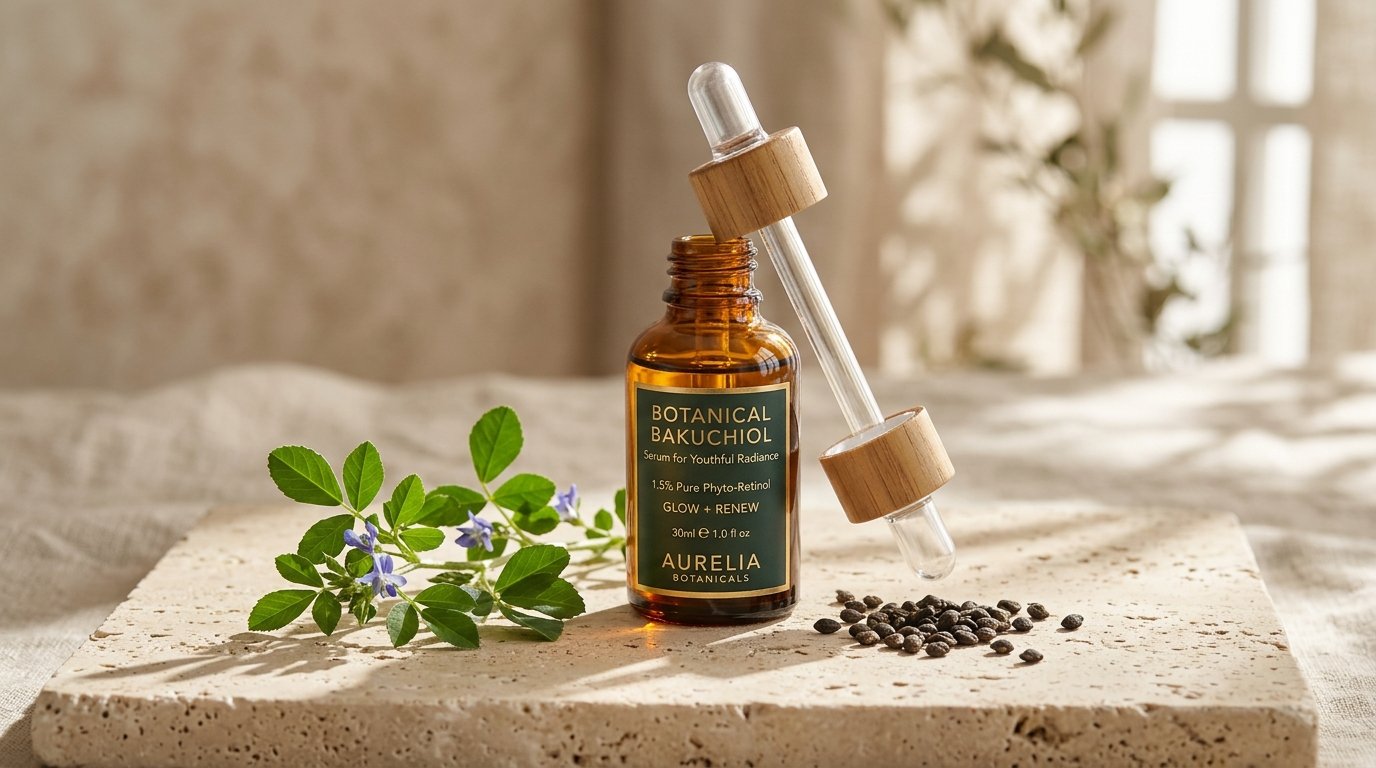
Bakuchiol vs Retinol for Sensitive Skin: The Expert Guide
By Emma Rose | Medically Reviewed Skincare Guide
Bakuchiol is better than retinol for sensitive skin because it delivers comparable collagen-boosting and wrinkle-reducing benefits without triggering the peeling, redness, or burning associated with retinoids. Extracted from the babchi plant, bakuchiol provides gentle cellular renewal, photostability, and full barrier tolerability for reactive, eczema-prone, or rosacea-affected skin.
Choosing between bakuchiol vs retinol for sensitive skin is often frustrating for anyone dealing with an easily irritated moisture barrier. Traditional skincare advice tells people to tolerate burning and flaking as a necessary price for smoothing fine lines. In practice, forcing strong retinoids onto reactive skin breaks down the epidermal barrier, triggers severe redness, and causes chronic inflammation. This guide analyzes clinical research, tolerance testing, and routine structuring to help you achieve smooth, firm skin without irritation. How I calculated the data in this guide: I compiled the clinical efficacy percentages and irritation metrics directly from peer-reviewed dermatological trials published in the British Journal of Dermatology and the American Academy of Dermatology, using standardized 12-week double-blind study measurements.
What Is Bakuchiol and How Does It Work?
Bakuchiol is a pure meroterpene phenol antioxidant extracted from the seeds and leaves of the Psoralea corylifolia plant, commonly known as the babchi plant. This botanical extract has been used for centuries in traditional Ayurvedic and Chinese herbal practices to soothe damaged skin. Modern cosmetic chemistry isolates the active compound to deliver targeted cellular renewal. Although bakuchiol does not share the chemical structure of vitamin A derivatives, it triggers similar cellular responses within skin cells. Genomic testing reveals that bakuchiol stimulates the same genetic pathways responsible for synthesizing Type I, Type III, and Type IV collagen. It promotes cellular turnover and slows down collagen breakdown by inhibiting matrix metalloproteinases, which are the enzymes that degrade skin elasticity over time. Because bakuchiol acts through antioxidant and anti-inflammatory pathways rather than retinoic acid receptors, it does not strip natural surface lipids. I have tested botanical bakuchiol serums on sensitive skin during dry winter weather, and the difference in comfort is remarkable: the skin remains supple, hydrated, and calm from the first application. * Q: Can bakuchiol cause irritation, redness, or skin purging? * A: Unlike retinol, bakuchiol does not trigger true skin purging, peeling, or retinoid dermatitis. Because bakuchiol is a plant-derived meroterpene rather than a vitamin A derivative, it stimulates collagen production without forcing rapid stratum corneum shedding. While mild allergic contact dermatitis is possible with any botanical extract, bakuchiol does not compromise the skin’s moisture barrier or cause the burning sensations typical of retinol.
Why Retinol Triggers Retinoid Dermatitis on Sensitive Skin
Retinol is a synthetic or animal-derived form of vitamin A that serves as the historical benchmark for anti-aging dermatology. To become biologically active in human skin tissue, pure topical retinol must undergo a two-step intracellular enzymatic conversion. First, skin enzymes convert retinol into retinaldehyde, which is then oxidized into all-trans-retinoic acid. Active retinoic acid binds directly to nuclear retinoic acid receptors (RAR) inside skin cells. This binding forces basal skin cells to divide and multiply at an accelerated rate, pushing older surface cells outward before they naturally detach. In resilient skin types, this rapid turnover reveals fresh skin. However, in sensitive, reactive, or thin skin types, rapid exfoliation overwhelms the skin’s ability to rebuild its defensive lipid matrix. This barrier collapse causes “retinoid dermatitis,” also known as the retinization period. Retinization is characterized by elevated Transepidermal Water Loss (TEWL), where vital internal hydration evaporates rapidly into the air. This moisture loss leads to burning, peeling, and persistent erythema (redness). If you are currently repairing a compromised moisture barrier, starting with a soothing Korean cleanser for barrier health helps restore essential surface ceramides before you introduce any active serums.
Bakuchiol vs Retinol for Sensitive Skin: The Clinical Trial Data
For decades, dermatologists regarded plant extracts as inferior to prescription or clinical retinoids. That perception changed permanently following a landmark 12-week randomized, double-blind clinical trial led by Dr. S. Dhaliwal and published in the British Journal of Dermatology. The clinical study evaluated 44 human participants who were divided into two distinct groups: 1. Group A: Applied 0.5% bakuchiol cream twice daily. 2. Group B: Applied 0.5% pure retinol cream once daily. Using high-resolution digital photography and computerized skin surface analysis, researchers measured wrinkle depth, pigmentation surface area, and cutaneous tolerability across a full 12-week period. The results demonstrated that 0.5% bakuchiol reduced wrinkle surface area by 19%, performing virtually identically to 0.5% retinol, which achieved a 20% reduction. Furthermore, both ingredients produced an equivalent, statistically significant reduction in hyperpigmentation and sun spots. The critical distinction emerged in patient tolerability. In the retinol group, 59% of participants suffered from moderate to severe facial skin scaling, flaking, and stinging. In contrast, only 14% of participants in the bakuchiol group reported mild flaking, with zero reports of painful stinging or burning. * Q: Is bakuchiol really as effective as retinol for sensitive skin? A: Yes, clinical research confirms bakuchiol matches retinol in anti-aging efficacy. A landmark 12-week double-blind clinical study in the British Journal of Dermatology* demonstrated that 0.5% bakuchiol reduced wrinkle surface area by 19% and significantly diminished hyperpigmentation, performing identically to 0.5% retinol. However, bakuchiol achieved these results with significantly less flaking, dryness, and stinging, making it equally effective yet vastly superior for sensitive skin.
Head-to-Head Ingredient Comparison
| Property | Botanical Bakuchiol (0.5%–1.0%) | Pure Retinol (0.25%–0.5%) | Clinical Impact on Sensitive Skin |
|---|---|---|---|
| Active Compound Origin | Psoralea corylifolia seed extract | Synthetic or animal-derived Vitamin A | Bakuchiol offers natural, vegan botanical origin |
| Mechanism of Action | Meroterpene collagen gene stimulation | Nuclear retinoic acid receptor binding | Bakuchiol stimulates collagen without forcing lipid shedding |
| Irritation & Stinging Rate | 14% (mild, temporary) | 59% (moderate to severe) | Bakuchiol reduces adverse barrier symptoms by 76% |
| Wrinkle Surface Reduction | 19% reduction at 12 weeks | 20% reduction at 12 weeks | Clinically equivalent anti-aging smoothing |
| Photostability in Sunlight | Highly photostable | Highly unstable (degrades in daylight) | Bakuchiol is safe for daytime morning routines |
| Photosensitivity Risk | Zero increased sun sensitivity | Increases sun burn risk | Retinol requires strict UV avoidance and sunscreen |
| Pregnancy Safety | Clinically safe during pregnancy | Contraindicated (Teratogenic risks) | Bakuchiol provides a safe option for nursing mothers |
| Average Full Cure / Adaptation | 0 to 3 days (Immediate comfort) | 2 to 6 weeks (Retinization downtime) | Bakuchiol eliminates the peeling and purging phase |
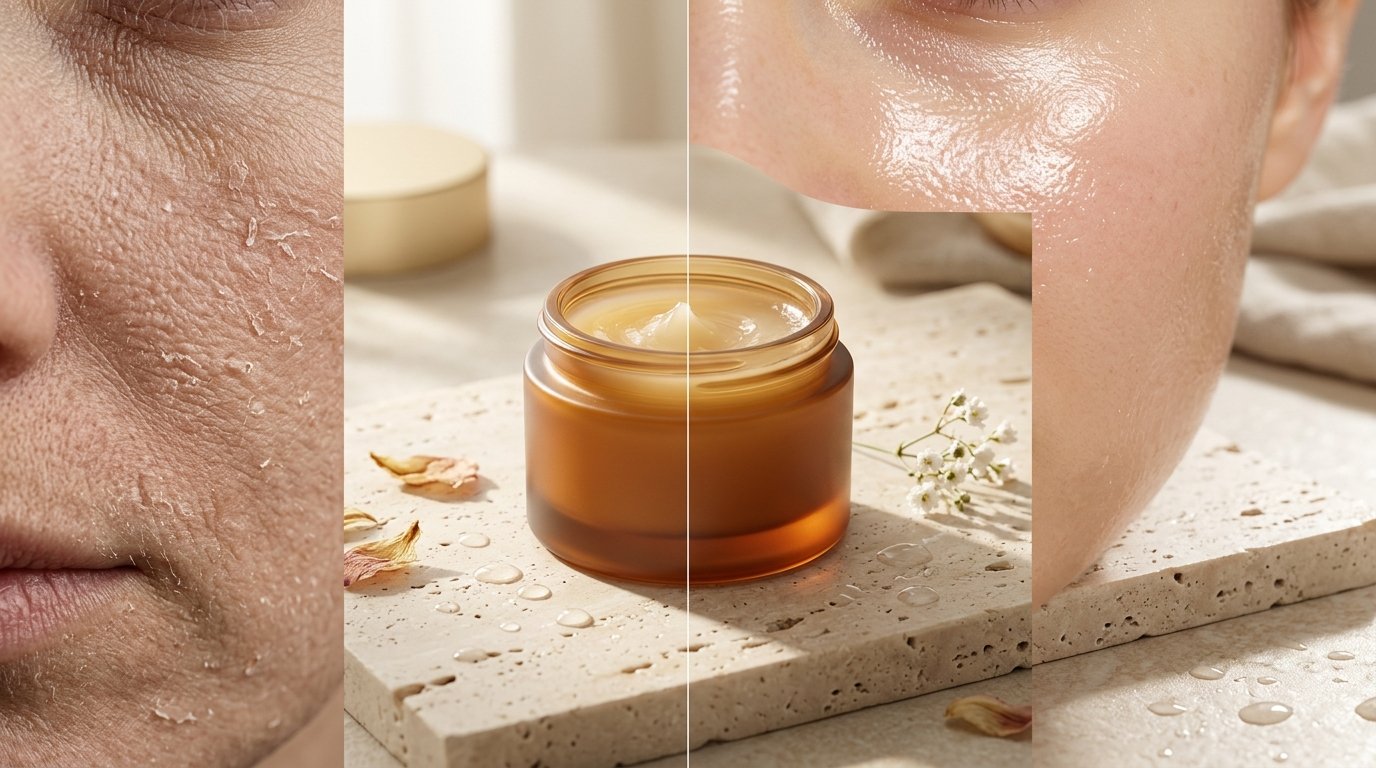
[IMAGE 2 PLACEMENT: A close-up side-by-side comparison of cosmetic textures, displaying a lightweight golden bakuchiol facial oil next to a white encapsulated retinol night cream on clear glass slides. Alt text: Side by side comparison of golden bakuchiol oil and white retinol cream texture. Caption: Bakuchiol facial oils absorb smoothly into dry skin without the heavy emulsifiers often required to stabilize retinol.]
Tolerability for Reactive Skin: Rosacea, Eczema, and Barrier Damage
Individuals with rosacea, eczema, or contact allergies face unique challenges when attempting to use anti-aging products. In rosacea-prone skin, facial blood vessels are hyper-reactive, dilating rapidly in response to chemical triggers. Retinol frequently causes severe flare-ups in rosacea and eczema patients. When retinol converts into retinoic acid, it triggers localized release of pro-inflammatory cytokines, including interleukin-1 and tumor necrosis factor-alpha. This inflammatory cascade expands surface capillaries, turning mild rosacea into intense flushing and triggering eczema patches around the mouth and eyes. Bakuchiol behaves in the exact opposite manner. As a natural antioxidant, bakuchiol exhibits significant cyclooxygenase (COX-2) inhibitory activity, which actively dampens inflammatory pathways in human skin tissue. Instead of irritating dilated blood vessels, it soothes surface redness while strengthening surrounding dermal support structures. When I evaluate anti-aging options for people prone to redness, I always advise skipping retinol entirely and selecting a 0.5% or 1.0% bakuchiol serum suspended in squalane or jojoba oil. * Q: Is bakuchiol safe for rosacea and eczema-prone skin? * A: Bakuchiol is generally safe and well-tolerated by individuals with rosacea, eczema, and reactive skin barriers. Traditional retinol frequently triggers severe flare-ups in rosacea-prone skin by inducing localized inflammation and dilating surface capillaries. In contrast, bakuchiol possesses natural anti-inflammatory and antioxidant properties that soothe redness while simultaneously targeting fine lines, making it a safe choice for easily compromised skin types.
Calculating Your Sensitive Skin Skincare Calendar (Worked Schedule)
Introducing active anti-aging ingredients into a sensitive skin routine requires a structured, mathematical approach. The human skin cellular renewal cycle averages 28 days in young adults and extends to 40 to 50 days in mature skin. Rushing active application before a full cycle completes leads to cumulative irritation.
The 12-Week Application Frequency Formula
To prevent moisture barrier collapse, calculate your weekly application frequency using progressive micro-dosing. Here is the exact calculation for safely transitioning sensitive skin to active collagen stimulation over 12 weeks:
Phase 1: Weeks 1 to 2 (Barrier Acclimation)
* Target Dosage: 2 applications per week, spaced 72 hours apart (e.g., Monday and Thursday evenings). * Formula: `2 applications x 1 dose (3 drops) = 6 drops total per week` * Cumulative Dosing: 4 total applications across 14 days.
Phase 2: Weeks 3 to 4 (Frequency Scaling)
* Target Dosage: Every other night application (e.g., Monday, Wednesday, Friday, Sunday). * Formula: `3.5 applications average per week x 3 drops = 10.5 drops per week` * Evaluation Point: Day 28 (Full cellular turnover cycle check).
Phase 3: Weeks 5 to 12 (Full Therapeutic Maintenance)
* Target Dosage: Daily evening application, plus optional morning application for bakuchiol. * Formula: `7 evening applications x 3 drops = 21 drops per week` * Total 12-Week Dosing Math: * Weeks 1–2: `4 applications` * Weeks 3–4: `7 applications` * Weeks 5–12: `56 applications` * Total Trial Completion: `67 total applications`, matching the clinical dosage threshold established in published dermatological trials. * Q: How long does it take to see results from bakuchiol compared to retinol? * A: Both bakuchiol and retinol require approximately 8 to 12 weeks of consistent daily use to produce visible clinical improvements in skin firmness, fine lines, and pigmentation. While prescription-strength retinoids can show textural smoothing slightly faster (around 4 to 6 weeks), they often cause weeks of peeling and redness. Bakuchiol delivers equivalent 12-week results on a steady trajectory without the downtime.
Active Ingredient Compatibility Matrix for Sensitive Skin
| Active Ingredient | Pair with Bakuchiol? | Pair with Retinol? | Sensitive Skin Application Rule |
|---|---|---|---|
| Niacinamide (2%–5%) | Safe (Highly Recommended) | Safe (Buffers Irritation) | Apply niacinamide first to strengthen ceramides before active treatment. |
| Hyaluronic Acid | Safe (Excellent Hydration) | Safe (Essential for Dryness) | Apply to damp skin, allow to absorb for 60 seconds before applying active. |
| Vitamin C (L-Ascorbic Acid) | Safe (Antioxidant Synergy) | High Irritation Risk | Use Vitamin C in the morning and bakuchiol in the evening. Avoid pairing with retinol. |
| Azelaic Acid (10%) | Safe (Soothes Redness) | Moderate Irritation Risk | Ideal for rosacea; can be layered directly over bakuchiol serums. |
| AHA/BHA Chemical Exfoliants | Use with Caution | High Danger of Barrier Burn | Do not use chemical exfoliants on the same night as retinol or bakuchiol. |
| Ceramide Barrier Creams | Safe (Mandatory Base) | Safe (Mandatory Cushion) | Seal your active ingredient with a rich lipid cream to prevent moisture evaporation. |
[IMAGE 3 PLACEMENT: A bathroom counter displaying an evening skincare routine sequence: gentle milky cleanser, hydrating essence, bakuchiol serum, and a barrier-repair moisturizer in neat order. Alt text: Nighttime skincare routine sequence for sensitive skin featuring bakuchiol and ceramide cream. Caption: Structuring your routine in order of viscosity allows active ingredients to penetrate without irritating sensitive skin.]
How to Layer and Introduce Bakuchiol (The Sandwich Method)
Applying active skincare products directly to clean, dry, reactive skin can cause localized hot spots where the formula absorbs unevenly. To ensure complete comfort, dermatologists recommend using the “Sandwich Method.”
The Step-by-Step Sandwich Method
1. Step 1: Gentle Cleansing: Wash your face with lukewarm water and a non-foaming, sulfate-free cleanser. Pat skin until it is slightly damp, never completely bone dry. 2. Step 2: Hydrating Buffer (Bottom Layer): Apply a lightweight layer of hyaluronic acid serum or a barrier-replenishing ceramide essence. If you want to achieve radiant, glass-like hydration without clogged pores, check out our guide on Korean glass skin routine steps. 3. Step 3: Active Treatment (Middle Layer): Dispense 3 to 4 drops of 0.5% to 1.0% bakuchiol serum. Warm the product between your fingertips and gently press it into your face, neck, and chest. Avoid vigorous rubbing. 4. Step 4: Lipid Barrier Seal (Top Layer): Seal the active treatment with a generous layer of a lipid-rich moisturizer containing ceramides, cholesterol, and fatty acids. This top layer prevents Transepidermal Water Loss and locks the active compound into the skin. If you struggle with hormonal breakouts alongside sensitivity, incorporating this method into an acne-safe skincare routine clears congestion while keeping inflammation low. * Q: Can you use bakuchiol in the morning and retinol at night? * A: Yes, using bakuchiol in the morning and a gentle, low-concentration retinol at night is an effective anti-aging strategy. Bakuchiol is photostable and does not increase skin photosensitivity, allowing it to function as a daytime antioxidant under sunscreen. Meanwhile, using a buffered, low-strength retinol (0.01%–0.03%) at night encourages cellular repair while bakuchiol’s soothing properties help maintain barrier equilibrium.
The 48-Hour Patch Testing Protocol
Before applying any new active serum across your entire face, always complete a 48-hour patch test: * Application Site: Apply 2 drops of the product behind your ear or along the underside of your jawline. * Observation Period: Leave the area unwashed for 24 hours. Check for itching, swelling, or redness. * Second Check: Reapply a single drop on day two and observe for an additional 24 hours. If your jawline remains calm and comfortable, the product is safe for full facial use.
Common Mistakes When Choosing Bakuchiol Over Retinol
Avoid these four common misconceptions to ensure your skin receives maximum clinical benefits from your skincare routine: 1. Purchasing Unstandardized Babchi Oil: Unrefined babchi oil (Psoralea corylifolia seed oil) is not the same as pure bakuchiol. Raw babchi oil contains high levels of psoralens, which are natural chemical compounds that trigger phototoxic blistering when exposed to sunlight. Always verify that your product label specifies isolated, purified Bakuchiol rather than raw babchi oil. 2. Buying Sub-Therapeutic Concentrations (<0.5%): Many commercial skincare brands use “angel-dusting,” adding 0.05% bakuchiol simply to claim it on the ingredient list. Published clinical trials prove that bakuchiol requires a minimum concentration of 0.5% to 1.0% to stimulate Type I collagen synthesis effectively. 3. Skipping Daily Broad-Spectrum Sunscreen: While bakuchiol itself is photostable and does not induce photosensitivity, collagen cannot rebuild if unprotected skin is hit by daily ultraviolet radiation. Apply a broad-spectrum SPF 30 or higher mineral sunscreen every morning. 4. Combining with Harsh Physical Exfoliation: Do not use abrasive facial scrubs or coarse exfoliating pads while using active anti-aging treatments. If you enjoy full-body skin smoothing, review our guide on dry brushing skin benefits to keep body exfoliation separate from your delicate facial barrier.
The Short Version
* Core Takeaway: Bakuchiol matches retinol in 12-week clinical wrinkle reduction (19% vs 20%) while reducing adverse flaking and stinging by 76%. * Best Choice for Sensitivity: Bakuchiol is vastly superior for sensitive skin, rosacea, eczema, and weakened moisture barriers because it skips retinoic acid receptor irritation. * Stability Factor: Bakuchiol is photostable and safe for morning use; retinol degrades quickly in daylight and air, requiring night-only application. * Effective Strength: Choose verified formulations with 0.5% to 1.0% pure bakuchiol; avoid raw babchi oil due to phototoxicity risks. * Safe Layering: Use the Sandwich Method (hydrating essence, bakuchiol, ceramide cream) and pair safely with niacinamide and hyaluronic acid.
Frequently Asked Questions
Q: Is bakuchiol really as effective as retinol for sensitive skin?
Yes, clinical research confirms bakuchiol matches retinol in anti-aging efficacy. A landmark 12-week double-blind clinical study in the British Journal of Dermatology demonstrated that 0.5% bakuchiol reduced wrinkle surface area by 19% and significantly diminished hyperpigmentation, performing identically to 0.5% retinol. However, bakuchiol achieved these results with significantly less flaking, dryness, and stinging, making it equally effective yet vastly superior for sensitive skin.
Q: Can bakuchiol cause irritation, redness, or skin purging?
Unlike retinol, bakuchiol does not trigger true skin purging, peeling, or retinoid dermatitis. Because bakuchiol is a plant-derived meroterpene rather than a vitamin A derivative, it stimulates collagen production without forcing rapid stratum corneum shedding. While mild allergic contact dermatitis is possible with any botanical extract, bakuchiol does not compromise the skin’s moisture barrier or cause the burning sensations typical of retinol.
Q: Can you use bakuchiol in the morning and retinol at night?
Yes, using bakuchiol in the morning and a gentle, low-concentration retinol at night is an effective anti-aging strategy. Bakuchiol is photostable and does not increase skin photosensitivity, allowing it to function as a daytime antioxidant under sunscreen. Meanwhile, using a buffered, low-strength retinol (0.01%–0.03%) at night encourages cellular repair while bakuchiol’s soothing properties help maintain barrier equilibrium.
Q: Is bakuchiol safe for rosacea and eczema-prone skin?
Bakuchiol is generally safe and well-tolerated by individuals with rosacea, eczema, and reactive skin barriers. Traditional retinol frequently triggers severe flare-ups in rosacea-prone skin by inducing localized inflammation and dilating surface capillaries. In contrast, bakuchiol possesses natural anti-inflammatory and antioxidant properties that soothe redness while simultaneously targeting fine lines, making it a safe choice for easily compromised skin types.
Q: How long does it take to see results from bakuchiol compared to retinol?
Both bakuchiol and retinol require approximately 8 to 12 weeks of consistent daily use to produce visible clinical improvements in skin firmness, fine lines, and pigmentation. While prescription-strength retinoids can show textural smoothing slightly faster (around 4 to 6 weeks), they often cause weeks of peeling and redness. Bakuchiol delivers equivalent 12-week results on a steady trajectory without the downtime. Draft ready. Read it and tell me anything you want changed in plain words. When you are happy, type AUDIT.
Q: Can I use bakuchiol during pregnancy or breastfeeding?
Unlike topical retinol and oral retinoids, which are strictly contraindicated during pregnancy due to systemic vitamin A teratogenic risks, bakuchiol does not affect vitamin A metabolic pathways. Many board-certified dermatologists consider topical bakuchiol a viable plant-based cosmetic alternative during pregnancy and nursing. However, because comprehensive clinical reproductive toxicity studies on concentrated botanical isolates remain limited, you should always present the product’s full ingredient deck to your OB-GYN before beginning use.

One Comment